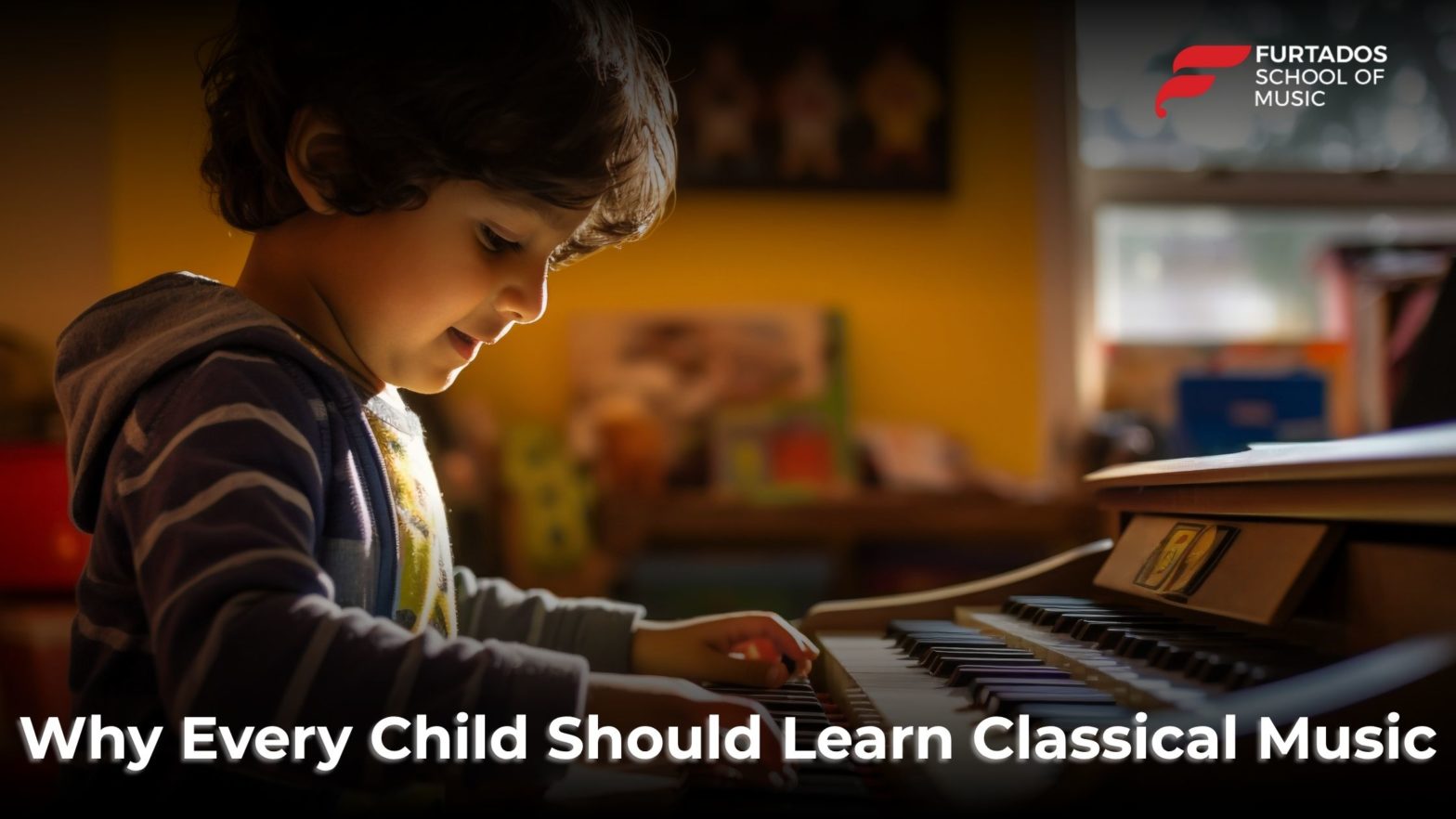
Music isn’t just entertainment — it’s a powerful tool that shapes how children think, feel, and grow. Among all musical forms, classical music for kids has a special role: it combines structure and creativity, discipline and imagination. At FSM, we believe that giving every child the chance to learn classical music can be one of the greatest gifts. Here’s why.
1. Boost Cognitive Growth & Academic Skills
Multiple studies show that learning classical music strengthens neural networks related to memory, attention, and problem solving. Listening to symphonies or ragas, and practicing simple exercises, can sharpen concentration and pattern recognition. Over time, these skills transfer to reading, math, and other core academic areas.
As kids engage with melody and rhythm, the brain learns to make connections across multiple senses — listening, analyzing, and predicting. These cross-sensory links accelerate learning in school and beyond.
2. Cultivate Emotional Intelligence & Self-Awareness
Classical music is rich in dynamics — from soft whispers to bold crescendos — which provides a language for feelings. When children hear a gentle piano piece shift into a grand orchestral swell, they begin to sense tension, release, sadness, joy, and more.
By naming what they feel (“This sounded calm,” “This part felt anxious”), children build emotional vocabulary. Over time, they can tune into their inner lives more clearly. With classical music education through FSM, children can explore mood, tone, and character in sound — developing empathy, self-regulation, and emotional maturity.
3. Nurture Discipline, Patience & Focus
Mastering even a simple classical piece requires patience and steady effort. Starting with short, age-appropriate tunes, children learn the discipline of practice: repeating small segments, refining subtle details, and improving gradually. This process nurtures focus, persistence, and a growth mindset.
At FSM, we emphasize foundational skills – listening exercises, solfege, basic rhythm games – before tackling complex pieces. This scaffolded approach ensures children feel capable and motivated, not overwhelmed.
4. Connect With Culture, History & Storytelling
Classical music is a living archive of human creativity. From Mozart, Beethoven, and Bach in the West to Tyagaraja, Purandara Dasa, and Muthuswami Dikshitar in Indian classical traditions, each composer tells a story of their time, emotions, ideas, and innovations.
When children learn these works, they don’t just hear notes – they connect with stories across centuries and continents. They can ask: Why did Beethoven write this amid deafness? or How did Tyagaraja’s devotion shape his compositions? This contextual awareness builds cultural literacy, curiosity, and deeper respect for heritage.
5. Build Lifelong Appreciation & Creative Confidence
Once children gain exposure to classical music, they’re more likely to appreciate diverse musical styles later — jazz, film scores, world music, contemporary compositions. Listening becomes richer and more discerning.
Moreover, with encouragement, many children might try composing short melodies or improvising variations — small acts of creativity that build confidence.
How to Begin: Simple Steps You Can Try Today
- Start with a short, expressive piece (2–3 minutes) each day. For example: a slow movement by Mozart, a gentle string quartet, or a short kriti in Indian classical tradition.
- Ask listening prompts like: “Which instrument did you hear first?”, “Did the music grow loud or soft?”, “How did it make you feel?”
- Alternate between Western and Indian classical pieces to expose the child to different textures, scales, and rhythmic ideas.
- Use interactive tools and games — clapping rhythms, echo-singing short melodies, or using simple percussion instruments to feel the beat.
- Make it part of daily routines — during breakfast, bedtime, or car rides — so music feels natural and not forced.
If your child ever shows curiosity to learn more, FSM offers structured classical music classes for kids that grow with them, balancing fun and technique, guided by expert teachers.
Final Thought
In a world full of distractions, classical music offers children an anchoring path — a path where melody, rhythm, and emotion converge into a rich inner life. When each child learns classical music, we’re not just teaching notes; we’re nurturing sharper minds, kinder hearts, and deeper humans.
At FSM, we’re honored to guide that journey, one note at a time.