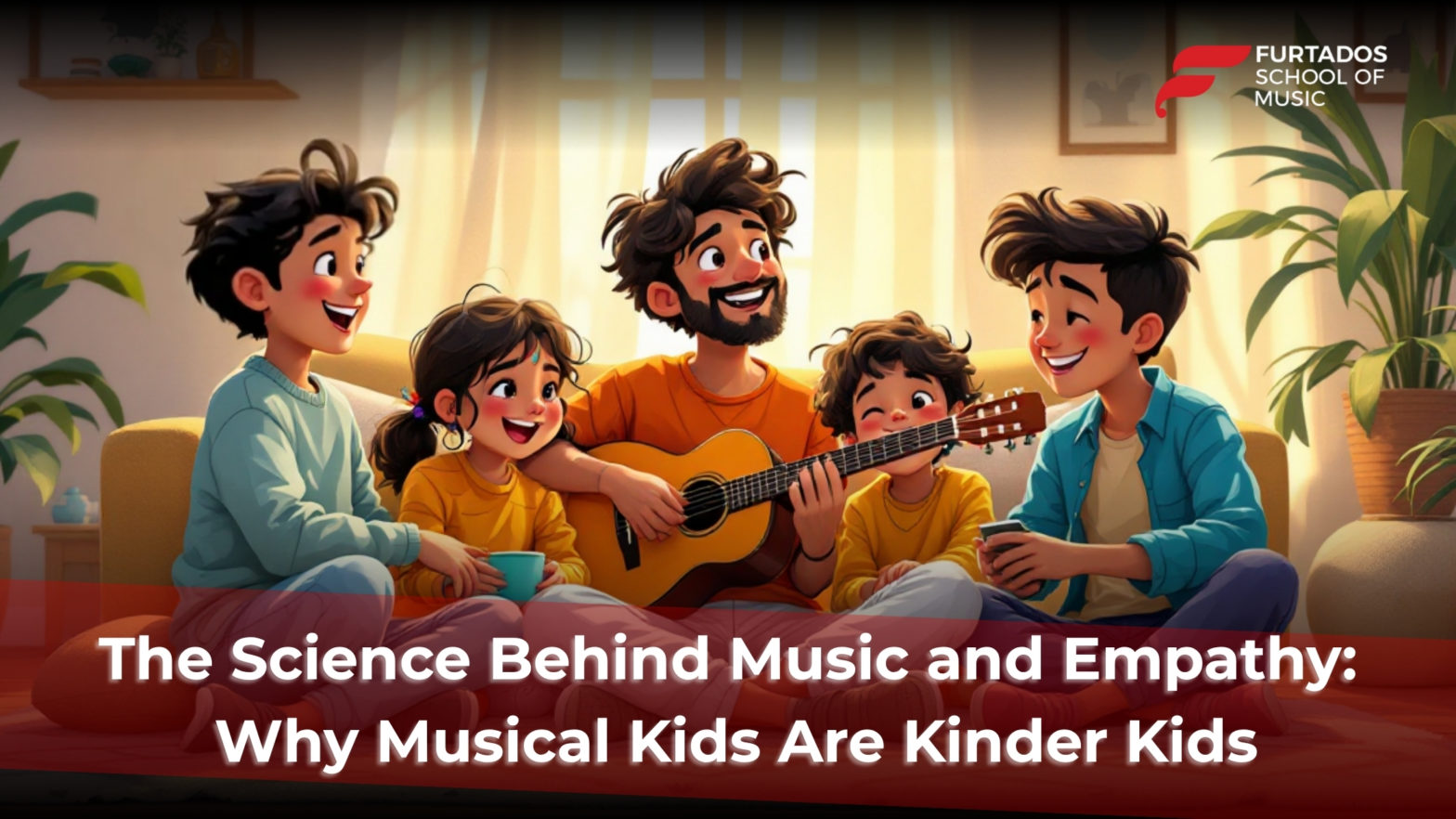
Discover the Science Behind Music and Empathy — how learning music builds empathy, emotional intelligence, and kindness in children. Explore why musical kids are more understanding, and how FSM nurtures this beautiful growth through the power of music.
The Science Behind Music and Empathy
The Heartbeat of Empathy Starts with Music
Every parent dreams of raising a kind, caring, and emotionally aware child. We teach them manners, compassion, and the importance of being kind — but did you know that music can do the same, and more?
Beyond being a source of fun and creativity, music education for kids plays a powerful role in shaping empathy and emotional understanding. Science shows that children who learn music aren’t just more disciplined or creative — they’re also more tuned in to the emotions of people around them.
Why Empathy Is Every Parent’s Superpower Tool
Empathy helps children understand and care about what others feel. It builds friendship, reduces conflict, and shapes emotionally intelligent adults.
As parents, when we nurture empathy, we’re really teaching our kids how to connect with the world — and music turns out to be one of the most natural ways to do that.
The Science: How Music Shapes a Kinder Mind
When a child listens to or plays music, their brain lights up in extraordinary ways.
Music activates regions responsible for emotion, attention, movement, and memory — meaning kids don’t just hear music, they feel it.
Studies show that children who take part in music education for kids develop stronger skills in recognizing emotions — like joy, sadness, or calm — through melodies and rhythm. Over time, this translates into a deeper ability to understand and share others’ feelings in real life.
So, the next time your child taps along to a song, sings in tune, or simply enjoys a beat — their brain is quietly learning empathy.
Making Music Together Builds Connection
Some of the most profound benefits of music appear when children play or sing together.
Think of choir groups, music classes, or even playful jam sessions at home — these moments help children listen, adjust, and harmonize with others.
Psychologists call this emotional synchronization — when kids match rhythms, emotions, and energy levels with their peers. This shared experience builds trust, understanding, and a beautiful sense of belonging.
So, music isn’t just about learning scales or songs. It’s about learning how to cooperate, respect, and care.
Emotional Intelligence: The Hidden Gift of Music
We all want our children to be emotionally strong — to handle frustration, express feelings, and relate kindly to others.
Music naturally builds emotional intelligence in children. When kids sing, compose, or play, they express feelings that words can’t always capture. Over time, this emotional outlet helps them become more self-aware and compassionate.
That’s why the benefits of music for children go far beyond talent or performance — they reach straight into the heart of who our children become.
How Parents Can Encourage Empathy Through Music
Here are a few easy ways to make music part of your child’s emotional growth:
- Start early: Even toddlers respond to rhythm and melody — clap, hum, or dance together!
- Encourage group activities: Enroll them in group music lessons or classes where they can collaborate and play together.
- Talk about feelings in songs: Ask your child what they think a song “feels” like — happy, sad, excited — and why.
- Stay consistent: The longer kids stay connected with music, the stronger their emotional benefits become.
Conclusion: Raising Kinder Kids, One Note at a Time
At its heart, music teaches the language of emotions. Every rhythm, every melody, every shared musical moment helps children grow more connected, caring, and compassionate.
So if you’ve ever wondered whether enrolling your child in music lessons is worth it — the answer is a resounding yes. You’re not just giving them a creative skill; you’re helping them build kindness that lasts a lifetime.
At FSM (Furtados School of Music), we believe every child deserves to experience the joy and empathy that music brings. Our programs go beyond instruments — they nurture hearts, minds, and the beautiful harmony between them.
Because when kids learn music, they don’t just play better — they feel better, and they make the world a little kinder.