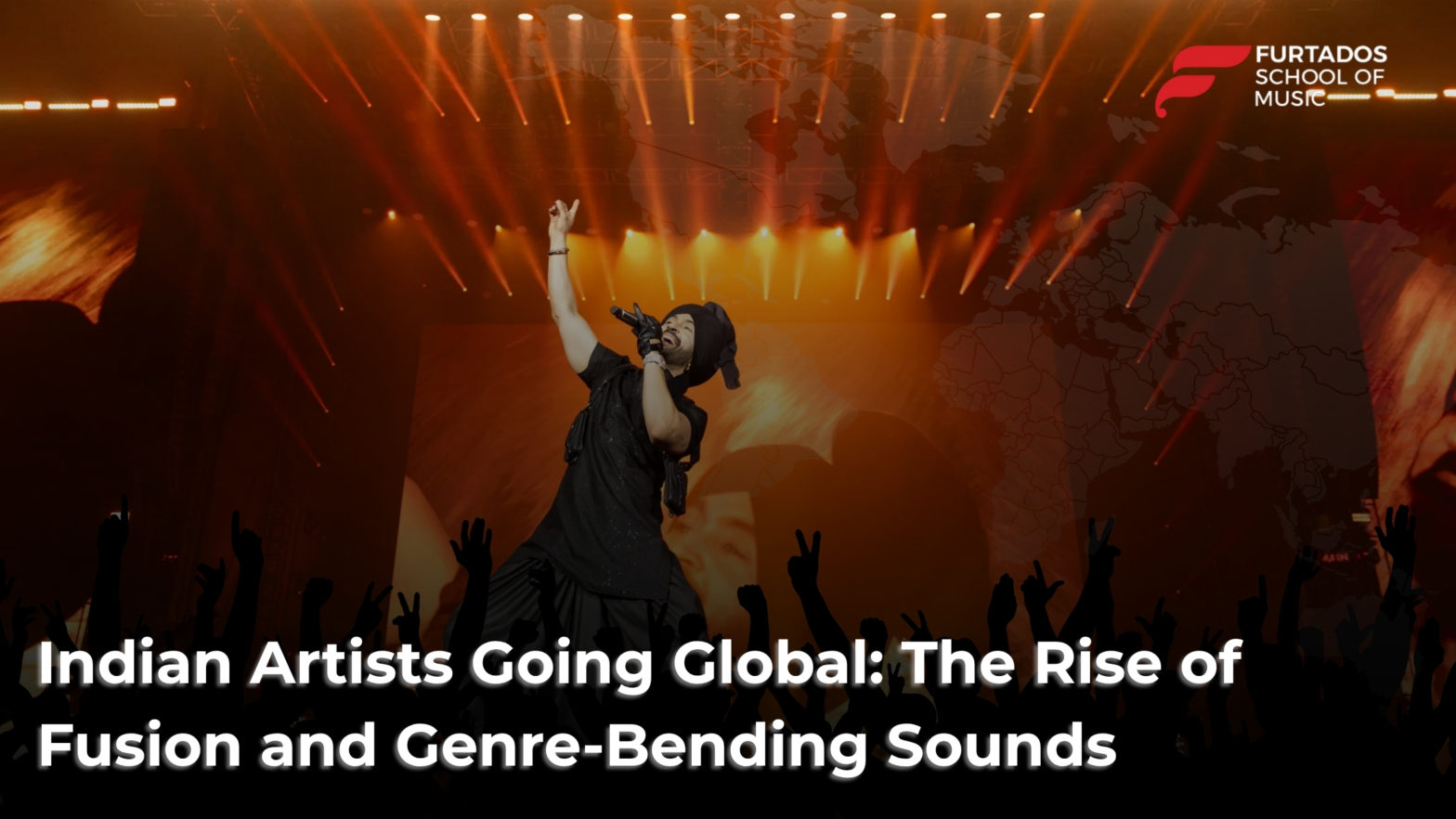
Over the last decade, Indian fusion music has emerged as one of the most exciting movements in the global music landscape. It’s not just about Bollywood or classical roots anymore — it’s about blending, experimenting, and collaborating across borders. From soulful ragas meeting electronic beats to folk tunes merging with jazz, this new era of genre crossover is redefining how the world experiences Indian sound.
The Global Stage is Expanding for Indian Artists
For decades, Indian musicians were seen as specialists in niche genres — classical, folk, or film-based compositions. But today, global Indian artists are breaking those boundaries. Arijit Singh, Shankar–Ehsaan–Loy, Anoushka Shankar, A.R. Rahman, and newer names like Prateek Kuhad, Tesher, and Ritviz are introducing Indian sensibilities into contemporary global genres such as pop, electronic, R&B, and even hip-hop.
Prateek Kuhad’s soulful indie pop has found listeners across the US and Europe, while Tesher’s “Jalebi Baby” became a viral TikTok hit featuring Jason Derulo — an example of true genre crossover success. Similarly, A.R. Rahman’s collaborations with international artists like The Pussycat Dolls and Hans Zimmer showcase how Indian sounds are being woven into global mainstream music.
When East Meets West: The Beauty of Fusion
Indian fusion music thrives on contrast — merging the precision of Indian classical with the free-flowing spirit of Western jazz or the energy of EDM. Artists are increasingly blurring the lines between genres, creating something fresh yet familiar.
Take, for instance, Coke Studio — a platform that celebrates collaboration between traditional Indian musicians and contemporary composers. Here, Sufi vocals blend seamlessly with modern arrangements, offering a new musical vocabulary to younger listeners. Independent artists too are pushing this evolution — merging Carnatic scales with synths, tabla beats with trap rhythms, and ghazals with lo-fi textures.
This isn’t just a sonic trend; it’s a cultural bridge. Through these collaborations, the world is discovering India’s diversity, not as a single sound but as a spectrum of endless possibilities.
The Reverse Influence: Global Artists Embracing Indian Sounds
The cultural exchange isn’t one-sided. Just as Indian musicians are expanding globally, international artists are increasingly turning to India for inspiration. Beyoncé incorporated Indian dance and costume in her performances; Coldplay’s Hymn for the Weekend featured Sonam Kapoor and showcased Varanasi’s vibrant spirit. Even producers like Diplo and Major Lazer have collaborated with Indian singers, blending bhangra beats and electronic music for global audiences.
This wave of cross-pollination highlights the global fascination with Indian culture — its rhythm, its stories, and its emotional depth. Through genre crossover, these global collaborations are helping Indian music gain recognition beyond language or geography.
Why Fusion Works: The Benefits of Going Global
The rise of global Indian artists has brought immense benefits — not just for musicians but for the entire industry. Fusion allows artists to reach new audiences and redefine their creative boundaries. It opens up international collaborations, sponsorships, and festival circuits. Platforms like Spotify, YouTube, and Instagram have played a massive role in this expansion, giving artists from every corner of India equal visibility.
For listeners, it means access to music that feels both local and global — familiar yet refreshingly new. It’s also strengthening India’s image as a cultural powerhouse, influencing film scores, global playlists, and even fashion and entertainment.
The Future of Genre Crossover in Indian Music
The fusion era is only just beginning. With India’s younger generation growing up on both Bollywood hits and Billie Eilish, the appetite for mixed-genre sounds is stronger than ever. More collaborations between global Indian artists and international producers are expected — from pop and hip-hop to classical and electronic.
As the world becomes more interconnected, Indian fusion music will continue to evolve — not as a trend, but as a movement celebrating creativity without borders. In this new age of genre crossover, music truly speaks one language — emotion.
Conclusion
The global rise of Indian artists proves one simple truth: when music travels, culture thrives. Every beat, every lyric, and every fusion track tells the story of how India’s soundscape is expanding beyond its borders. This is not just the globalization of Indian music — it’s India’s musical identity taking its rightful place on the world stage, inspiring a generation of artists and listeners to believe that music, when shared without boundaries, can truly unite the world.