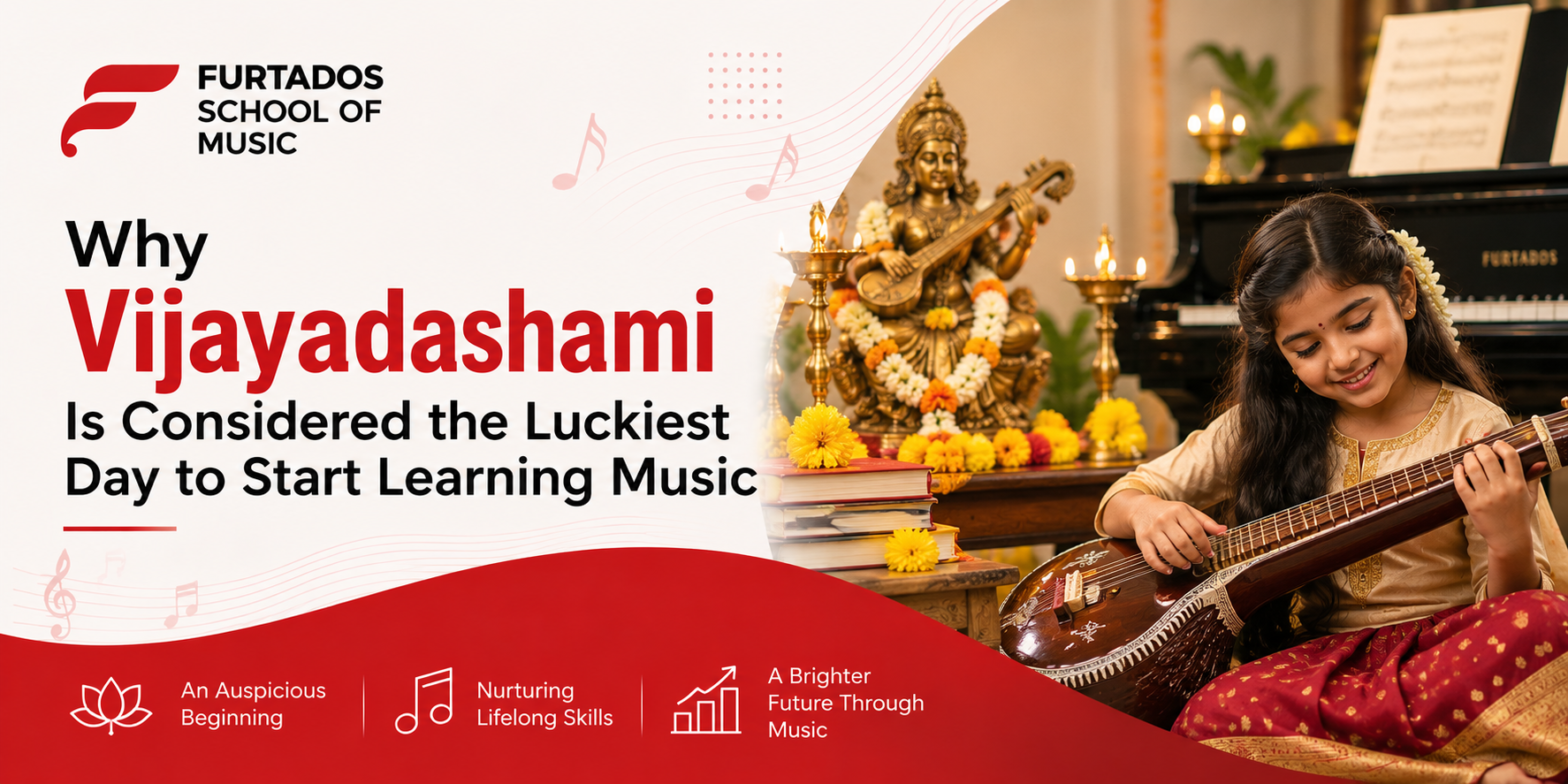
What if the best day to begin your child’s musical journey arrives only once every year? In 2026, that day falls on 20 October. Across India, families wake up early and light lamps. They place books, instruments, and tools before the deity. Children touch them with folded hands. The air feels like a fresh start, wrapped in incense and hope. That day is Vijayadashami, and many parents believe it is the luckiest time to start learning music.
What Makes Vijayadashami So Auspicious for New Beginnings?
Vijayadashami falls on the tenth day after Navaratri, the nine nights devoted to Goddess Durga. The word itself means the victory of the tenth day. Two great stories mark this triumph. Goddess Durga defeats the demon Mahishasura after a fierce battle. Lord Rama defeats Ravana and restores dharma. Both tales carry one message. Courage, effort, and goodness win in the end.
Because of this, tradition treats the whole day as shubh. Many families believe it needs no separate muhurat. Whatever you begin carries the blessing of victory. People start new ventures, buy vehicles, and enroll children in new lessons on this day. Parents feel that a beginning made today will not stall halfway.
Vidyarambham: Where Learning Begins With a Blessing
In Kerala, Karnataka, and Tamil Nadu, the day holds a special ritual called Vidyarambham. The word means the beginning of knowledge. A child sits on a parent’s lap or beside a teacher. The elder guides the little finger to trace the first letters, often in a plate of rice. Many families chant a prayer to Ganesha and Saraswati before the first stroke.
The days before this ritual matter too. In many homes, books and instruments rest before the deity during the final nights of Navaratri. On Vijayadashami, children take them back with a blessing. The instrument returns to the hands that will now learn to play it. That small moment feels deeply moving to watch.
Saraswati, Sound, and the Divine Link Between Music and Learning
Goddess Saraswati stands at the heart of this tradition. She holds a veena in her hands and a book close by. Tradition sees her as the goddess of knowledge, speech, music, and the arts. Notice how music sits beside learning in her very form. Indian thought never treated them as separate paths.
Our culture also speaks of Nada Brahma, the idea that the universe began as sound. Under this view, a single note is more than noise. It is a vibration that carries meaning. A child who sings the first Sa on this day joins a tradition thousands of years old. Music becomes a form of prayer, not only a skill to master.
Navaratri Music and Dance: A Festival That Never Stops Moving
Navaratri itself is a celebration of rhythm. Garba and dandiya circles swirl through Gujarat each night. Durga Puja pandals in Bengal echo with the dhak and the dhunuchi dance. Tamil and Telugu homes arrange Golu displays and sing devotional songs for visitors. Many classical dancers offer their art to the goddess during these nights.
Children who grow up in this soundscape absorb rhythm without noticing. By the tenth day, they already tap along to every beat. A formal first lesson then feels natural, not forced. The festival has already taught them to listen, move, and feel before any teacher says a word.
Ayudha Puja: When Musicians Honour Their Instruments
Just before Vijayadashami comes Ayudha Puja, the day people worship the tools of their craft. Farmers honour ploughs and drivers honour vehicles. Musicians clean their tabla, harmonium, veena, and guitar, then garland them with flowers. The instrument stops being an object and becomes a teacher. This belief teaches children to treat their instrument with care and love.
A child who watches this ritual learns something no textbook explains. Skill grows from respect. When you start learning music on Vijayadashami, the instrument already feels like a companion. That bond makes daily practice feel lighter, because you are not forcing a habit. You are nurturing a relationship.
Why Parents Choose This Day to Start Learning Music
Ritual turns a routine admission into a family memory. A child remembers the day they began, because the whole house treated it as special. That feeling builds pride and commitment. It also plants the right attitude from the start. Respect for the teacher, patience with practice, and gratitude for the gift of sound grow together.
The blessing also does not limit itself to classical forms. Your child may dream of a raga, a guitar riff, or a piano melody. The spirit of the day welcomes all of them. Saraswati does not ask which genre you chose. She only asks that you begin with sincerity.
How to Celebrate Your Child’s First Music Day at Home
You do not need a grand ceremony. Clean the instrument or the practice space first. Place it before an image of Saraswati with a lit diya and a few flowers. Let your child touch it with folded hands. Then let them sing one note or play one chord while the family listens. Finish with a blessing from the elders and a sweet.
Keep a small notebook from that day. Write the date and one line about how your child felt. Months later, that page will remind you why you began. On difficult practice days, it will also remind your child.
Begin Your Child’s Music Journey With FSM This Vijayadashami
Every great musician started with one small first step. If this Vijayadashami feels right for yours, FSM is ready to walk beside your child. Furtados School of Music (FSM) carries the legacy of Furtados, a name in Indian music since 1865. Today FSM has touched more than 3 lakh families across India. Students learn through vocal classes in Indian and Western styles, where they build voice control, confidence, and stage presence. They also choose from instrument classes in keyboard, piano, guitar, drums, violin, and more. Classes run at centres, in schools, and online.
Make this festival the day your child’s music begins. Book a demo class with FSM today and give your child a first note they will remember for life.