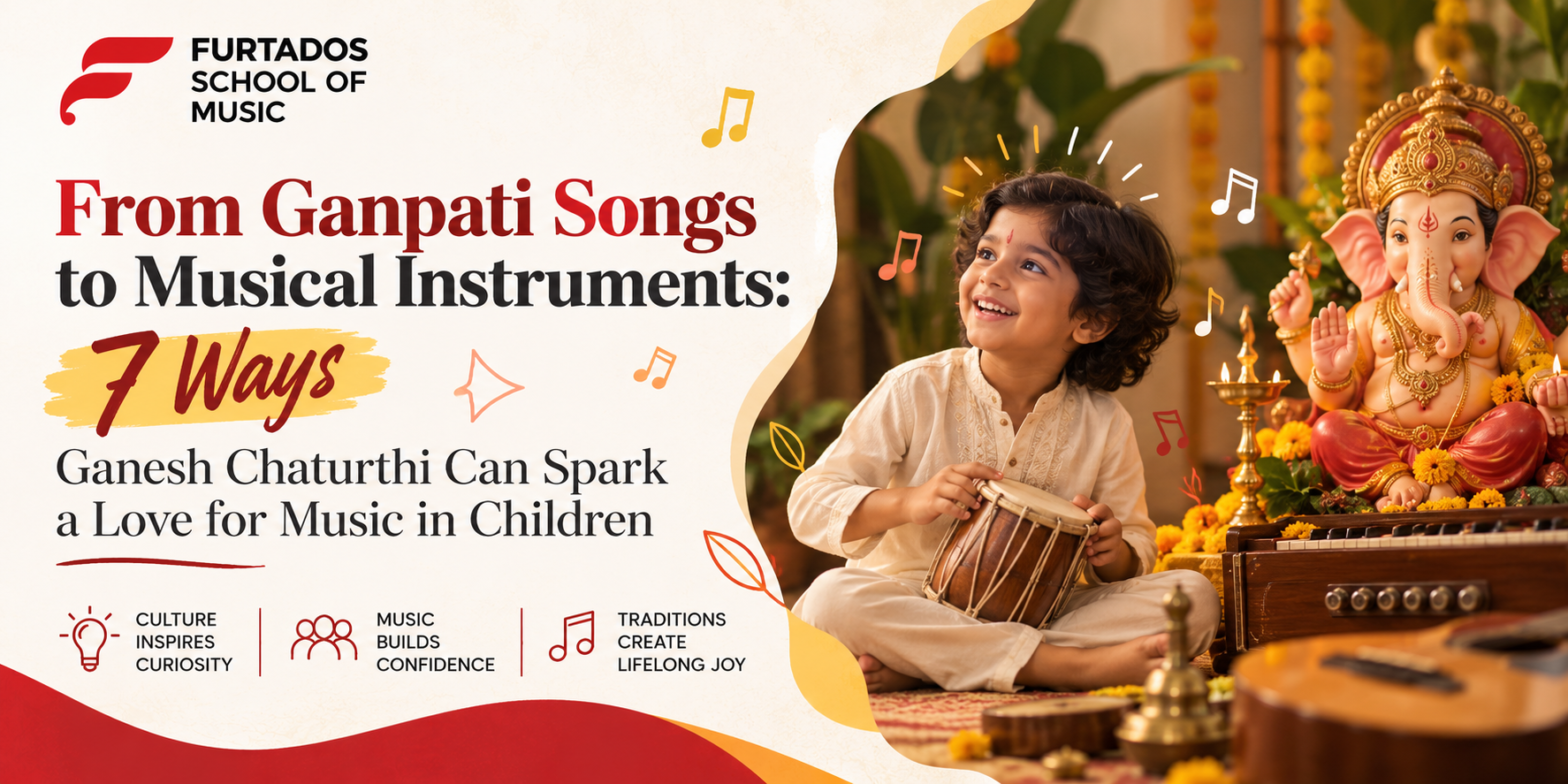
There is a certain magic in India during Ganesh Chaturthi. Streets glow with lights, pandals burst with colour, and the sound of music seems to follow you everywhere. The beat of the dhol travels through neighbourhoods, families gather for prayers, and children eagerly move between celebrations, taking in everything around them. For a child, the festival can feel almost larger than life, with something new to see, hear and experience at every turn.
Ganesh Chaturthi holds a special place in India’s cultural fabric, bringing together devotion, art, music and community. It is a celebration of Lord Ganesha, who is associated with wisdom, learning and new beginnings. Yet, for children, the festival is often experienced through its sights and sounds long before they understand its deeper traditions. They hear familiar Ganpati songs, clap to the rhythm of drums and watch musicians bring celebrations alive. These moments can quietly become their first introduction to the joy of making music.
And that is where the festival offers parents a wonderful opportunity. Instead of simply allowing children to listen to the music around them, we can encourage them to explore it. A song they hear during Ganesh Chaturthi can become their first melody, while a powerful dhol beat can awaken their curiosity about rhythm. Sometimes, a child’s musical journey begins not with a formal lesson, but with a sound that makes them stop, listen and smile.
1. Let the Dhol Introduce Them to Rhythm
Think about a Ganesh Chaturthi procession and the dhol is often impossible to ignore. Its energetic beats make people move, clap and dance, creating a shared rhythm among everyone around them. Children respond to this naturally, even before they understand what rhythm means. Parents can build on that instinct by encouraging children to clap along to a Ganpati song or recreate simple beats using their hands. These little moments may look like play, but they help children develop a sense of timing and musical awareness.
2. Turn Ganpati Songs into a Musical Discovery
Children often learn best through things that already feel familiar and joyful. During Ganesh Chaturthi, they hear the same devotional and festive songs at home, during aarti and at community celebrations. Instead of simply listening, encourage them to sing along or identify parts of the melody they recognise. You could even pause a familiar song and see if they can continue the tune. Such simple activities teach children to listen closely, recognise patterns and understand how music moves, without making the experience feel like another lesson.
3. Bring Festival Melodies to the Keyboard
A keyboard can make this curiosity even more exciting because children can immediately experiment with the sounds they have been hearing. A child might wonder which keys create a familiar Ganpati melody or try to find the tune independently. That simple process of searching, listening and trying again can make learning deeply personal. As their confidence grows, they can explore melodies, chords and different sounds, gradually moving from copying something familiar to creating music of their own.
4. Discover Indian Rhythm Through Tabla
Ganesh Chaturthi is also a wonderful opportunity for children to discover the richness of Indian percussion. The tabla introduces young learners to a fascinating combination of sound, movement and rhythm, while giving them a hands-on connection with an important part of Indian musical tradition. Children can begin with simple patterns and gradually understand how different strokes create different sounds. There is something especially engaging about percussion because the connection between movement and music is immediate. Every beat they create becomes something they can hear, feel and understand.
5. Give Familiar Songs a New Sound with Guitar
Music does not have to stay within one tradition, and children often enjoy discovering how a familiar song can sound completely different on another instrument. With a guitar, even a simple set of chords can allow a child to accompany a festive song they already know. Playing along while family members sing can become a small but meaningful performance. It gives children the feeling of being part of the music rather than simply being an audience, while also showing them how music can bring people together.
6. Encourage Them to Sing, Move and Create
Not every musical experience needs an instrument. Sometimes, the best place to begin is simply with the voice, a pair of hands or an imaginative idea. Let children sing during family celebrations, create simple rhythms or make up a little melody of their own. There is no need to worry about perfect pitch at this stage. When children are given the freedom to experiment without fear of getting things wrong, they become more comfortable expressing themselves. That confidence can become just as valuable as the musical skill they develop along the way.
7. Give Them a Stage, Even If It Is Your Living Room
One of the most beautiful things about festivals is the opportunity they create for children to participate. A child who has spent days learning a song may suddenly want to perform it for grandparents, while another may proudly play the keyboard as the family sings together. Let them have that moment, even if their audience is simply the people sitting in the living room. Preparing for a performance and sharing something they have learned teaches children confidence, responsibility and expression. More importantly, it creates a memory around music that can stay with them long after the festival ends.
When a Festival Becomes a Musical Memory
Years later, children may not remember every decoration, every visit or every detail of a particular Ganesh Chaturthi. They may, however, remember the sound of the dhol echoing through their neighbourhood, singing a favourite Ganpati song with their family or playing their first melody on an instrument. That is the beauty of learning through experiences. Music becomes connected with people, emotions and celebrations, rather than remaining something confined to a classroom or practice session.
At Furtados School of Music (FSM), we believe these experiences can play an important role in shaping a child’s relationship with music. Learning an instrument is only one part of the journey; having opportunities to perform, participate and share music can make that learning come alive. Through festivals, celebrations and musical events, we encourage students to prepare festive songs, perform with fellow learners and experience the excitement of being part of something bigger than themselves.
For a young musician, standing on stage with a song they have worked hard to learn can feel like a larger-than-life moment. When that moment becomes part of a vibrant celebration such as Ganesh Chaturthi, it can create memories that children carry with them for years. Because sometimes, a child’s love for music does not begin with a lesson. It begins with a beat, a song, a celebration and the feeling of wanting to join in.