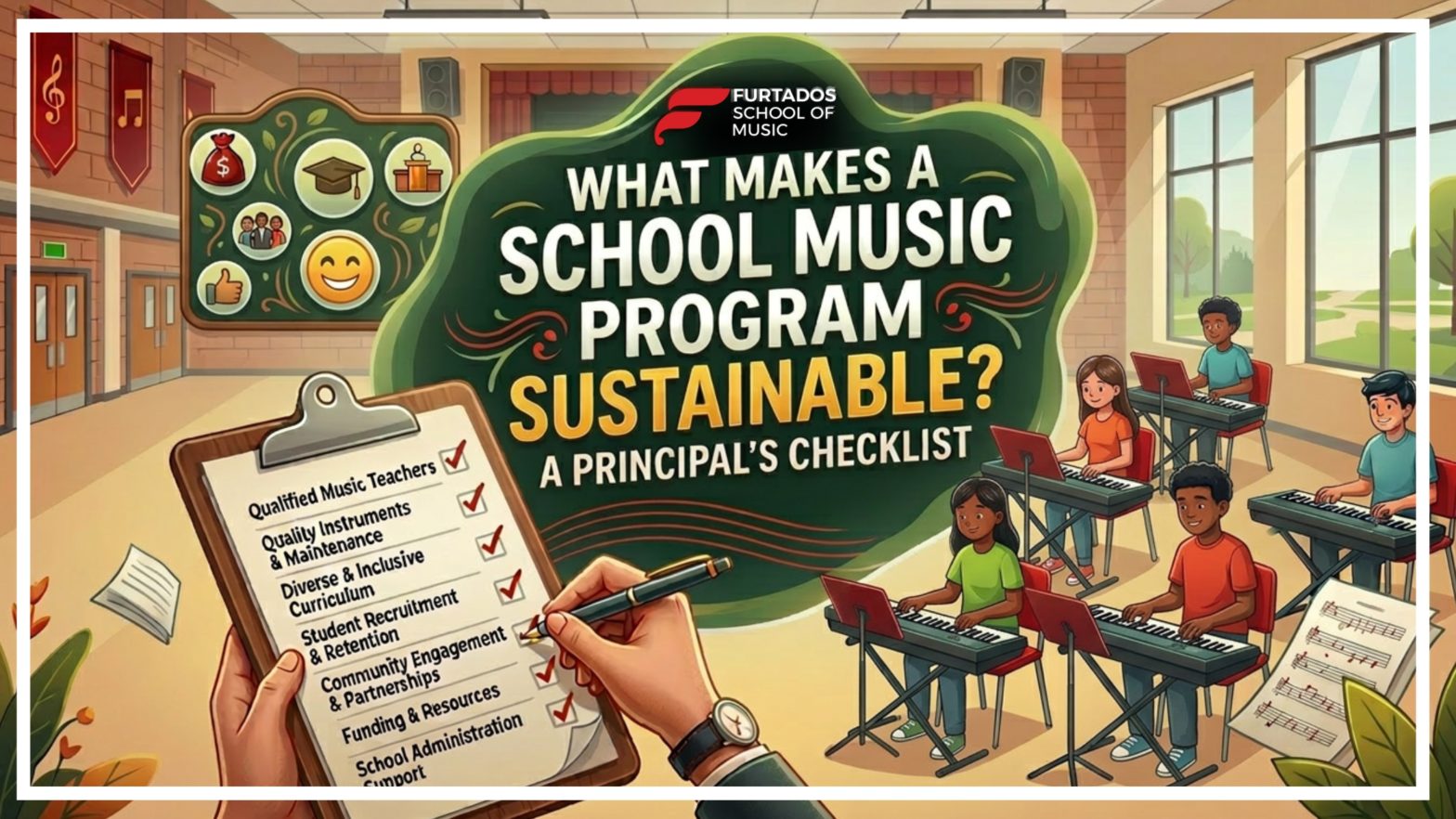
A school may launch a music program with enthusiasm, but sustainability is what separates a short-term initiative from a long-term institutional strength. Many schools begin with excitement – new instruments, student registrations, a grand Annual Day performance – but without structure and leadership planning, momentum fades.
The real question for school heads is not how to start, but how to build Sustainable music education programs that continue to grow year after year.
This checklist is designed for principals and leadership teams who want music to become a lasting pillar of their institution.
1. Leadership Commitment: The Foundation of Sustainability
No music program survives without leadership backing. If music is treated as optional or seasonal, it will remain fragile.
For Sustainable music education programs, leadership must:
- Allocate a dedicated annual budget
- Include music in strategic planning
- Appoint qualified faculty, not part-time substitutes
- Provide proper infrastructure (dedicated music rooms, storage, sound equipment)
When principals actively advocate for music, the school community responds with equal seriousness.
2. Curriculum Over Performances
A common mistake is reducing music education to rehearsals for events. Performances are important, but they are outcomes – not the program itself.
If you’re exploring How to build a successful school music program, begin with curriculum design:
- Structured progression (Beginner to Advanced)
- Vocal and instrumental pathways
- Music theory integration
- Ensemble learning (choir, band, group performance)
- Periodic skill assessments
A well-designed curriculum ensures continuity even when batches graduate or teachers change.
3. Hiring and Retaining Qualified Educators
Strong faculty determine long-term program health. Music educators need more than performance skills – they need classroom management, structured teaching ability, and mentorship qualities.
Key School music program sustainability factors include:
- Hiring certified or professionally trained educators
- Offering stable contracts and growth opportunities
- Providing teaching resources and updated syllabi
- Encouraging professional development
Consistency builds trust with parents and students, which strengthens enrollment stability.
4. Measurable Outcomes Build Parent Confidence
Parents invest in programs that show visible progress. A sustainable music program should not operate informally.
To strengthen Music education in Indian schools, leadership teams should introduce:
- Structured assessments
- Graded examinations
- Skill-based report cards
- Certification pathways
When growth is measurable, music gains academic credibility within the school ecosystem.
5. Financial Planning and Infrastructure Management
Sustainability requires foresight. Instruments need maintenance. Technology needs upgrades. Events require logistics.
To strengthen Sustainable music education programs, principals should:
- Plan multi-year budget allocations
- Maintain instrument inventory systems
- Schedule regular maintenance
- Build partnerships with music institutions where required
A financially planned program reduces sudden disruptions.
6. Student Engagement and Ownership
Retention improves when students feel connected to the program. Beyond curriculum, schools must create culture.
To successfully implement How to build a successful school music program, consider:
- Student-led bands or choirs
- Intra-school music clubs
- Composition and songwriting opportunities
- Monthly performance platforms
When students identify themselves as musicians, sustainability becomes organic rather than administrative.
7. Integration With Academic Vision
Music should not operate in isolation. Schools that integrate arts into their broader educational philosophy see stronger results.
Important School music program sustainability factors include:
- Aligning music with holistic development goals
- Connecting rhythm exercises with mathematical thinking
- Linking songwriting to language development
- Encouraging collaborative projects across departments
This integration strengthens music’s institutional relevance.
8. Community Visibility and Advocacy
A sustainable program is visible. Regular showcases, assemblies, open rehearsals, and community events reinforce value perception.
Strong Music education in Indian schools depends on advocacy – helping families understand that music builds discipline, confidence, teamwork, and cognitive development.
When the community sees outcomes, long-term support follows.
9. Technology and Adaptability
Modern music programs must adapt to changing learning environments. Recording basics, digital composition tools, and hybrid lesson capabilities strengthen continuity.
Future-ready Sustainable music education programs use technology not as a trend, but as a support system for learning consistency.
Conclusion: Sustainability Is Strategic, Not Accidental
Building Sustainable music education programs is not about one successful concert or one talented batch. It is about structured curriculum, leadership planning, financial foresight, measurable outcomes, and student engagement.
For principals asking How to build a successful school music program, the answer lies in long-term systems rather than short-term enthusiasm.
At Furtados School of Music (FSM), we actively align our approach with these School music program sustainability factors. Our structured curriculum pathways, trained educators, assessment frameworks, and performance ecosystems are designed to strengthen Music education in Indian schools in a consistent and measurable way.
Because sustainability in music education is not about adding an activity – It’s about building an ecosystem that continues to inspire, educate, and evolve.