Ever wondered what makes Indian classical music so enchanting? The answer lies in the foundation—the swaras in Indian music. These musical notes are the building blocks of melodies, shaping every raga, ghazal, or folk tune. Whether you’re a complete novice or a budding musician, understanding Indian music notes is like learning the alphabet before forming sentences. In this guide, we’ll journey through the world of swaras, explore their cultural depth, and reveal how to learn swara Indian classical techniques confidently. Let’s bring sound and soul together!
What Exactly Are Swaras? A Musical Alphabet
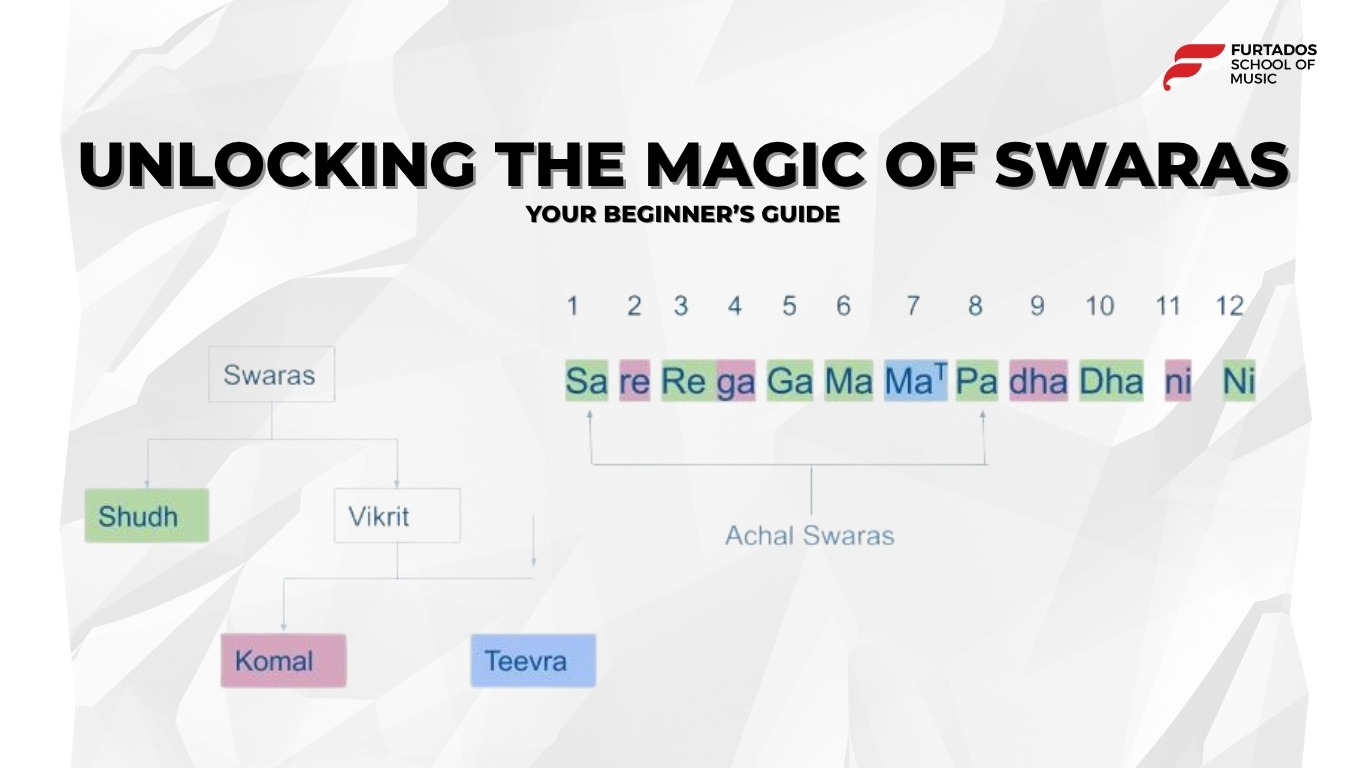
At its core, a swara is not just a pitch—it’s a nuanced tone richly rooted in tradition and science. Riders of the seven-note scale—Sa, Re, Ga, Ma, Pa, Dha, Ni—what Hindustani and Carnatic traditions call the Saptak or octave . Comparable to the Western “Do-Re-Mi,” each swara is considered a complete sound wrapping resonance, emotion, and cultural meaning .
The Seven Swaras Revealed
Let’s introduce these melodic personalities:
- Sa (Shadja) – The tonic or root note; unchanging and foundational .
- Re (Rishabh) – The second note, often called Ri in Carnatic.
- Ga (Gandhar) – The third note, shape of melody.
- Ma (Madhyam) – The fourth; can be natural or “sharp.”
- Pa (Pancham) – The fifth; always steady like Sa .
- Dha (Dhaivat) – The sixth, adds momentum.
- Ni (Nishad) – The leading tone before returning to Sa.
These Indian music notes aren’t just mechanical steps—they carry ancient symbolism, linked with nature, planets, chakras, and emotions . Learning their colors is a gateway to intuitive musicality.
Between Notes: Vikrit Swaras & Octaves
Beyond the pure seven, there are vikrit swaras—altered notes: komal (flat) and teevra (sharp) versions of Re, Ga, Dha, Ni and Madhyam respectively . These enrich melodies and deepen ragas. Plus, swaras span three octave ranges:
- Mandra Saptak (low)
- Madhya Saptak (middle)
- Taar Saptak (high)
Why Swaras Matter: Beyond the Notes
Singing in sargam (Sa-Re-Ga…) trains your ear to recognize pitch and tone. Mastering swaras is your ticket to nail ragas—for instance, Raga Yaman uses specific swara patterns to evoke serenity . By understanding how to learn swara Indian classical, you’re unlocking the entire melodic universe in Indian art music.
FSM Spotlight: Furtado’s School of Music Steps In
At FSM , fostering strong swara foundations is a core philosophy. Beginner vocalists begin with Sruti boxes and drone learning to train correct pitch from day one. Whether singing or playing harmonium or veena, FSM teachers guide every student to learn swara Indian classical confidently, laying essential groundwork for expanding into ragas or film music.
A Quick Guide to Explore Swara Practice
- Start with Sa: Use a drone (tanpura or digital) and match your voice or instrument.
- Practice Sargam: Sing or play “Sa Re Ga Ma Pa Dha Ni Sa” ascending and descending.
- Train with Drone: Build pitch accuracy with aid of tanpura harmony.
- Use Metronome: Develop steady rhythm and flow.
- Explore Komal & Teevra: Add emotional depth by practicing altered swaras.
Discography: Listening to Swaras in Action
Want real-world references? Try these Indian albums showcasing swaras beautifully:
- Ravi Shankar – The Sounds of India – Spotify
- Anoushka Shankar – Land of Gold – Apple Music
- L. Subramaniam – South Indian Classical Violin – Amazon Music
While not mainstream pop, these gems highlight swaras, ragas, and improvisation in vivid color.
Ready to Dive Deeper?
- FSM offers sampler classes focusing on swara training.
- Use apps or virtual tutors to check your pitch accuracy.
- Join beginner workshops or online communities centered around swara practice.
Final Note: The Swara Journey Begins Here
Swaras in Indian music are more than notes—they are the seeds of melody, emotion, and culture. Learning them opens doors to ragas, lyricism, and improvisation. With tools like drone practice, sargam, and expert guidance from FSM and beyond, you can confidently begin to learn swara Indian classical and explore what’s possible with your voice or instrument. Take the first step—sing a swara, feel its resonance, and let it guide your musical adventure.