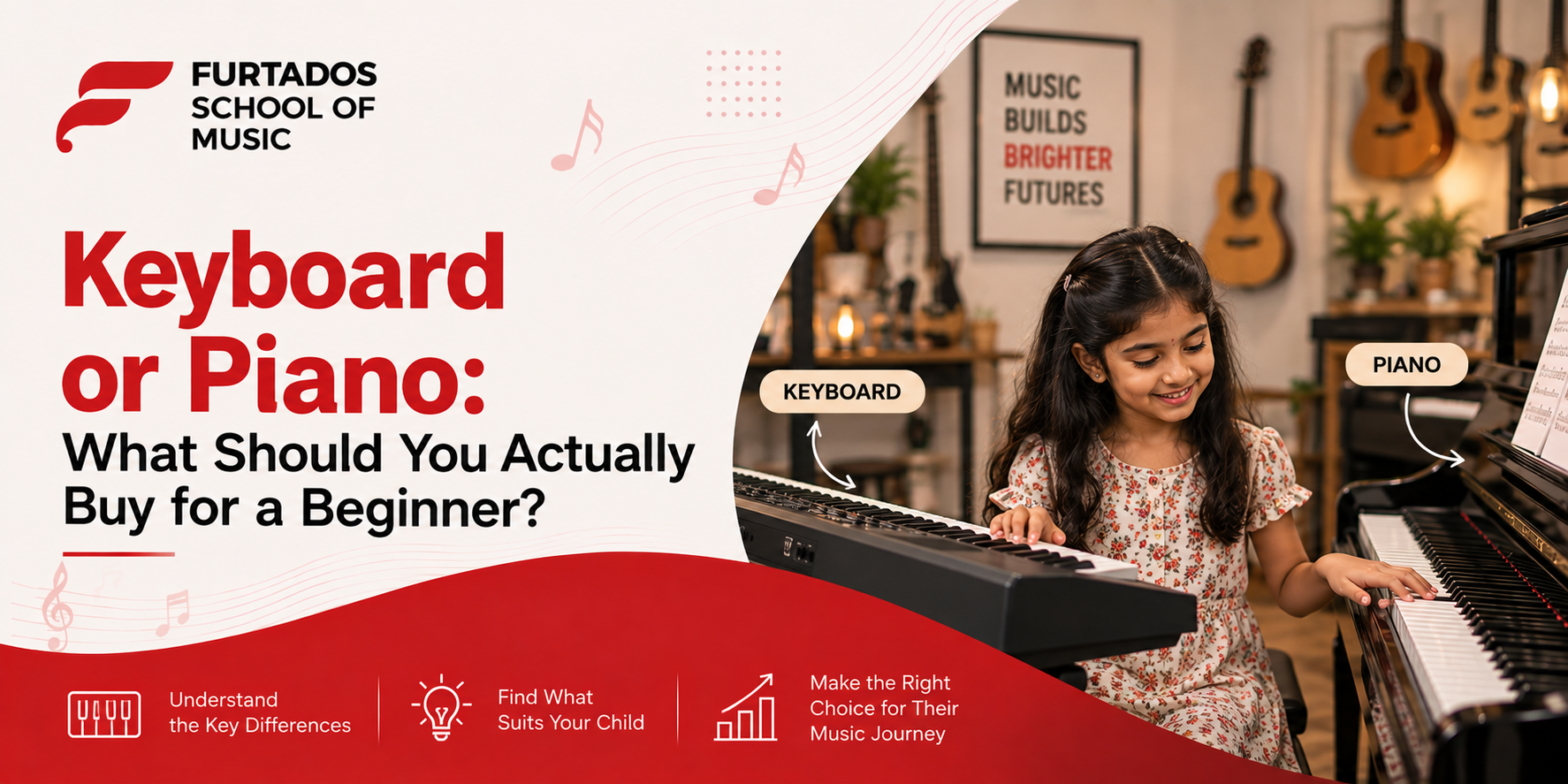
You finally decide to start music lessons. Then you reach the music store and freeze. One instrument looks light and colourful. Another looks serious and costs far more. Both claim to be perfect for learners. So which one should you pick?
This confusion is common among parents and adult learners alike. The good news is that the answer depends on just a few things. Let us walk through keyboard vs piano for beginners in plain language. That way, you spend your money once and spend it well.
Keyboard vs Piano for Beginners: What Is Actually Different?
A keyboard is a light electronic instrument. It usually has 61 keys, plus many built in sounds, rhythms and lesson tools. A piano, whether acoustic or digital, aims to feel and sound like the real thing. The biggest gap sits in how the keys respond when you press them. Musicians call this key action.
Sam Ash explains that most 88 key digital pianos use weighted keys. These copy the resistance of acoustic piano hammers. Many 61 key keyboards, on the other hand, have lighter, unweighted keys. Unweighted keys are easier to press, while weighted keys respond like a traditional piano, as School of Rock notes. That one detail shapes how your fingers grow stronger over time.
Is a Keyboard Enough? When 61 Keys Make Sense
A keyboard is a smart pick when you are only testing the waters. Yamaha points out that 61 key models like the PSR E283 are compact. They also come with learning tools such as Duo Mode and Smart Chord. These features keep young learners curious. MusicRadar adds that children can find fully weighted keys hard to press. Lighter keys often suit a first instrument. Older beginners rarely face this problem and can learn on any keybed.
Budget matters too. Sam Ash notes that a decent 61 key keyboard costs about half as much as an entry level weighted piano. Its advice is simple. Regular practice matters most. An affordable keyboard you play daily beats a better piano you wait years to afford.
Digital Piano for Beginners: Why Weighted Keys Win in the Long Run
If real piano playing is your goal, a digital piano for beginners makes more sense. It gives you 88 keys, the full range of an acoustic piano. School of Rock recommends a full 88 keys for anyone who plans to play classical piano one day. Weighted keys also build finger strength and control, which helps when pieces get harder.
Switching later from a light keyboard to a heavier piano feels awkward. You must relearn your touch. Starting on 88 weighted keys removes that adjustment period and the cost of upgrading. A digital piano also needs no tuning. You can practise silently with headphones, and it takes far less room than an upright. For apartments and shared homes, these points count.
Acoustic Piano or Digital? A Quick Reality Check
What about a traditional acoustic piano? An upright offers the richest touch and sound. However, it costs more, needs regular tuning, and takes up serious space. You also cannot mute it for late evening practice. Moving it is a project of its own. For most first time learners, a digital piano for beginners is the more practical choice.
Best Keyboard to Learn Piano: The Middle Path
Some families want something between the two. For them, the best keyboard to learn piano is often a semi weighted 88 key model. Piano Dreamers describes the Korg Liano as a full range instrument with a refined semi weighted action. It weighs only about 6 kilograms, so you can move it easily. It will not match the weight of a real piano. Still, it works well as a bridge while your child decides how serious to get.
Piano Exam Plans Change the Answer: What ABRSM and Trinity Say
If you plan to sit graded exams, check the rules before buying. ABRSM allows digital pianos that meet clear standards. They need a recognisable piano tone, full size weighted keys and a sustaining pedal. Trinity also accepts digital pianos at all grades. They need a weighted, touch sensitive keyboard, a sustain pedal where required, and enough range for your pieces. A basic 61 key keyboard will not meet these rules. So if exams are on your radar, start with a weighted digital piano.
Common Mistakes Beginners Make When Buying a Piano or Keyboard
The first mistake is buying on sound features alone. A keyboard with hundreds of tones looks exciting. Yet your child may use only the piano voice for months. The second mistake is ignoring key size. Tiny or toy sized keys train your hands for the wrong spacing. The third mistake is skipping the pedal. Many pieces need it, and exams expect it.
The fourth mistake is waiting for the perfect instrument. Many learners delay lessons for months while they compare models. Meanwhile, their fingers learn nothing. Pick a sensible option that fits your budget, then start. You can always upgrade once your skills and goals become clear.
Quick Buying Checklist Before You Pay
Before you pay, check four things. First, decide the key count. Choose 61 to start and 88 for the long term. Second, check the key action. Weighted is best, and semi weighted is a fair compromise. Third, look for a sustain pedal and a headphone jack. Fourth, buy a sturdy stand and a bench at the right height. Good posture protects young wrists. Whenever possible, press the keys in person, and ask your teacher for a second opinion.
Keyboard or Piano? Our Honest Answer
Choose a keyboard if your budget is tight, space is limited, or your child is only exploring music. Choose a digital piano for beginners if you are serious about piano or plan to take exams. It also suits anyone who wants one instrument that lasts for years. Either way, practise daily. Consistency beats gear every time.
Still unsure which one fits your goals? Let a teacher guide you. Book a free trial class with FSM. Our experienced piano faculty will help you choose the right instrument and start playing with confidence. Take your first step towards the best keyboard to learn piano journey today.