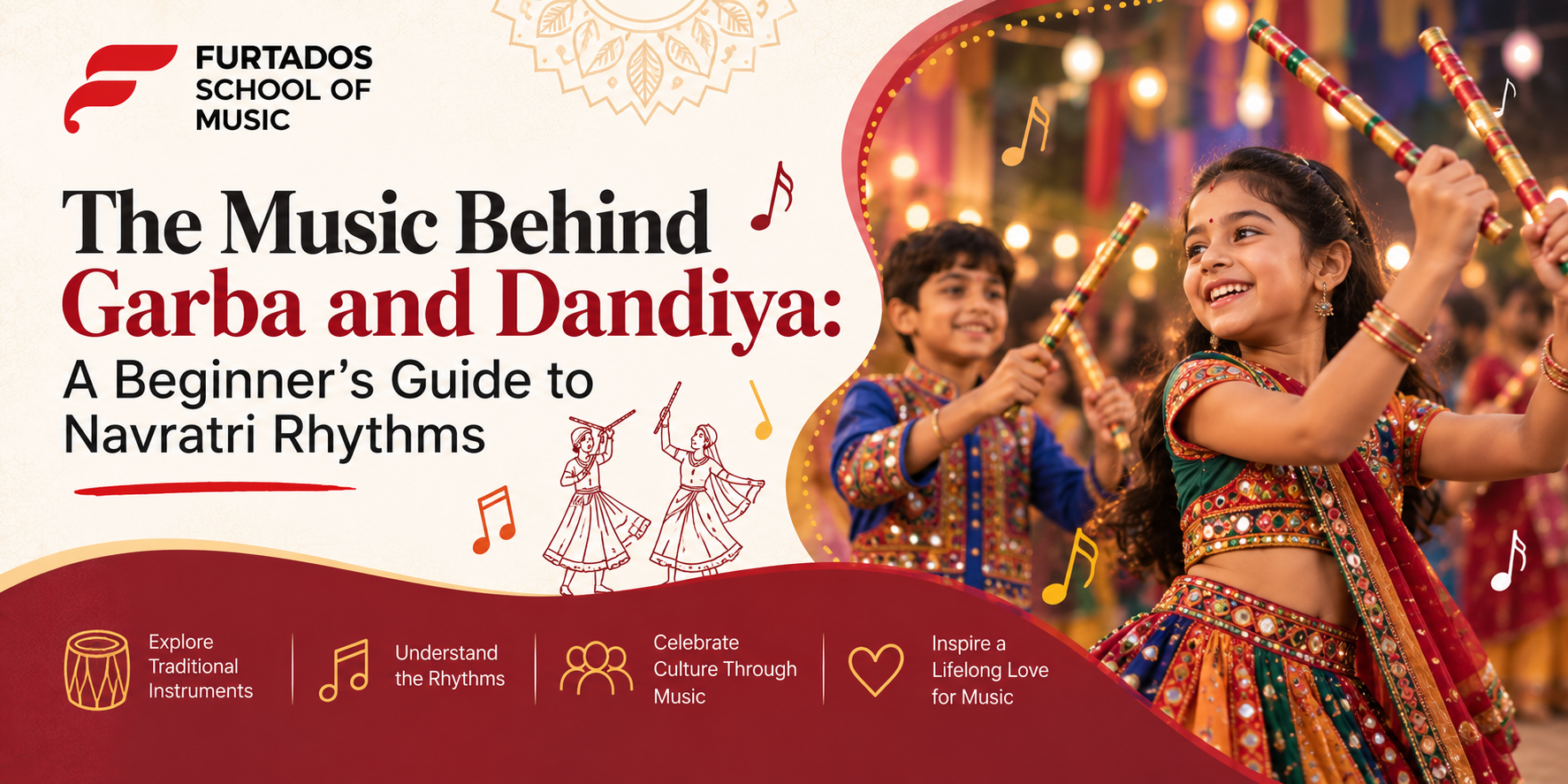
Ever notice how your feet start moving before you even register the song? That instinct is the pull of garba and dandiya music. Navratri turns ordinary streets into swirling circles of colour and sound. Every clap and every stick tap follows a rhythm built over centuries. Once you understand what you are actually hearing, the dance stops feeling like a set of steps to memorise. It starts feeling like a conversation between you and the beat.
Garba and Dandiya Music: Two Rhythms, One Festival
Many beginners assume garba and dandiya music are the same thing with different names. They are not. Garba is danced in a circle, usually with claps or simple hand movements, and it often centres on devotional songs to the goddess. Dandiya raas swaps claps for wooden sticks, played in rhythmic pairs with a partner. The music shifts to match each style. Garba songs tend to build slowly, layering vocals over a steady beat. Dandiya tracks push the tempo faster, since the stick hits themselves become part of the percussion. Knowing this difference helps you predict what is coming before the DJ even announces it.
Cracking the Code Behind Navratri Rhythms
Most navratri rhythms are built on repeating beat cycles, much like a bar works in Western music. A common one is the six beat cycle, where the accent falls on the first beat every time. Traditional dhol players call this dadra tal in classical terms, though nobody uses that label out loud on the garba floor. You will also hear eight beat cycles in faster dandiya sections, giving dancers room to add spins between stick hits. Try counting silently the next time a track starts. The melody and lyrics keep changing, but the underlying beat count rarely does. That count is your anchor.
Garba Instruments for Beginners: Meet the Sound Makers
A garba song is rarely built from just one instrument, and garba instruments for beginners are worth learning to spot by ear. The dhol carries the low, driving pulse that dancers feel before they consciously hear it. Alongside it, the dholak adds a softer, more melodic layer of percussion, common in slower devotional openings. Small brass hand cymbals punctuate the beat with bright accents, often marking the exact moment dancers should clap or turn. Harmoniums and shehnais fill the space between beats with sustained melody, giving singers a musical bed to work from. Hearing these instruments up close makes it far easier to pick them out once the music starts.
How the Dhol Sets the Tempo for the Whole Circle
Watch any garba circle closely and you will see dancers adjusting their pace to the dhol, not the singer. The dhol player often controls tempo changes live, speeding up gradually as the night builds toward its peak. A slow dhol beat keeps movements wide and graceful. A fast one shrinks steps and adds sharper turns. Beginners often struggle here, trying to match lyrics instead of the drum. Next time you are in the circle, shift your attention entirely to the dhol for ten seconds. Your feet will likely adjust on their own, without you thinking about it at all.
From Village Courtyards to Global Stages
Garba and dandiya music started in Gujarat’s villages, played on simple hand drums during nine nights of devotion to the goddess. Today the same rhythms fill stadium sized events across India and diaspora communities worldwide, layered with synthesisers and remixed beats. Despite the production changes, the core beat cycles have barely shifted. That consistency is part of why the music feels instantly recognisable, whether you are at a small society garba or a ticketed arena event. The instruments have modernised. The rhythm holding it all together has not.
A Quick Challenge Before Your Next Garba Night
Before you head out this Navratri, try this. Play any garba track and clap only on the first beat of each cycle, ignoring the melody completely. Once that feels steady, add a second clap on the beat you think matters most rhythmically. You are essentially teaching your body to hear navratri rhythms the way a dhol player does, one accented beat at a time. It is a small exercise, but it changes how the entire dance feels once you are actually in the circle.
Take the Rhythm Further
Understanding the rhythm behind garba and dandiya music turns you from a spectator copying steps into someone genuinely listening to the festival. If this has sparked real curiosity about rhythm and percussion, FSM runs beginner friendly classes in tabla, dhol and other percussion instruments all year round. Book a free trial class with FSM and start learning the beats behind the dance, not just the steps.