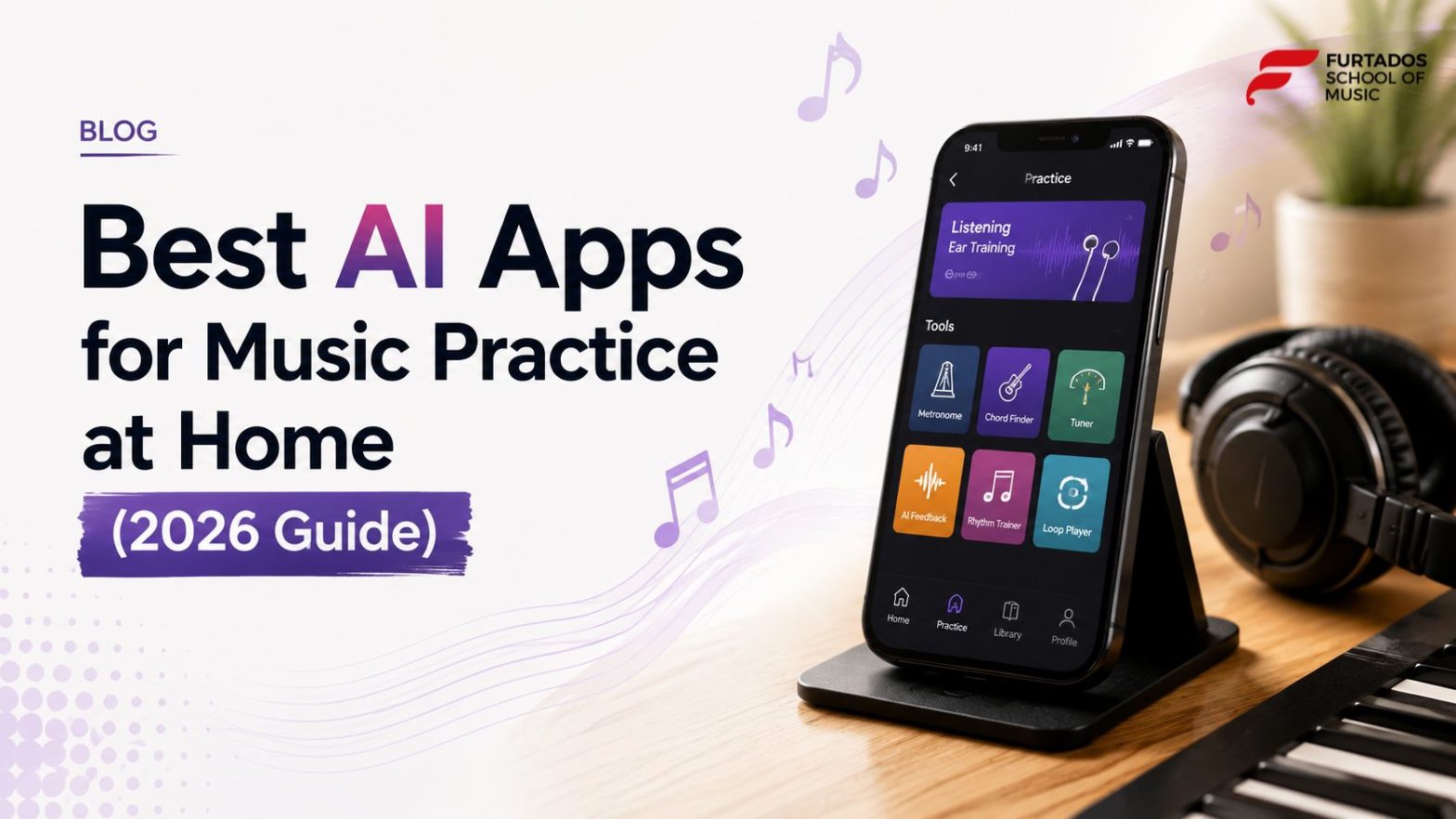
Ask any music teacher what actually determines a student’s progress, and almost none of them will say talent. They’ll say practice – specifically, what happens in the twenty minutes between lessons when nobody’s watching. That’s usually where things fall apart. Practice gets skipped, or it happens without any real feedback, and a full week can go by with a student rehearsing the same mistake on repeat.
This is the gap AI apps for music practice have actually started closing – not by replacing a teacher, but by making the in-between time less of a guessing game.
What Makes These Apps Different From a Metronome or a YouTube Tutorial
A metronome keeps time. A tutorial shows technique once. Neither tells a student, in the moment, that they’re rushing the second beat of every bar or drifting flat on sustained notes. That real-time correction is what separates a genuine AI practice apps for music students from a basic backing track or a passive video.
Most of these tools listen while a student plays or sings, compare it against the correct pitch, rhythm, or timing in real time, and flag the specific moment things went off – not just a vague “try again.” That kind of precise, immediate feedback is normally what a private lesson provides, which is exactly why it matters between lessons, not during them.
Apps Worth Actually Trying
The market’s crowded, but a few tools consistently show up as genuinely useful rather than gimmicky:
Yousician offers guided lessons with real-time pitch and rhythm analysis, which makes it a solid starting point for students who want structure without needing a teacher present for every session.
Moises is particularly useful for students learning by ear – it separates a song’s vocals, drums, and bass, so a student can mute the guitar part, say, and play along with the isolated track until it’s second nature.
For vocal students specifically, tools like Singing Carrots and SingSharp go beyond simple pitch detection, tracking things like pitch stability and per-note accuracy over time, closer to genuine coaching than a basic tuner app.
For ear training apps, the better ones move past generic interval-recognition drills and adapt difficulty based on where a specific student keeps slipping – which matters far more for actual improvement than working through a fixed, one-size-fits-all course.
Where AI Still Falls Short
None of this replaces a teacher, and it’s worth being upfront about that with students and parents alike. AI music practice tools are excellent at catching a wrong note or a rushed beat. They’re far weaker at the things a good teacher actually does – reading why a student is frustrated, adjusting a lesson on the fly, or explaining a phrasing choice that has more to do with musical feeling than a measurable metric.
The apps work best as a bridge between lessons, not a substitute for them – a way to make solo practice time actually productive, so the next lesson starts from real progress instead of the same corrections as last week.
Building a Routine Around These Tools
The apps that get used consistently tend to share one thing: they fit into a short, repeatable daily habit rather than a long weekly session. Fifteen focused minutes a day, with the app flagging specific errors to work on, beats an hour of unstructured practice once a week.
A workable routine usually looks like this: a short warm-up using guided lessons or ear-training drills, ten minutes of focused practice on whatever the app flags as weakest, and then, if there’s time, a few minutes just playing along to a song using stem-separation tools purely for enjoyment. That last part matters more than it seems – students stick with practice they actually enjoy.
Where This Fits Into Real Learning
Used well, AI apps for music practice don’t change what a student is learning – they change how consistently that learning actually happens between lessons. At Furtados School of Music, teachers increasingly encourage students to pair structured, in-person instruction with these tools at home, so practice time is guided rather than aimless. If you’re looking to build a more consistent practice routine for your child, it’s worth asking FSM’s faculty which tools they’d recommend alongside regular lessons.