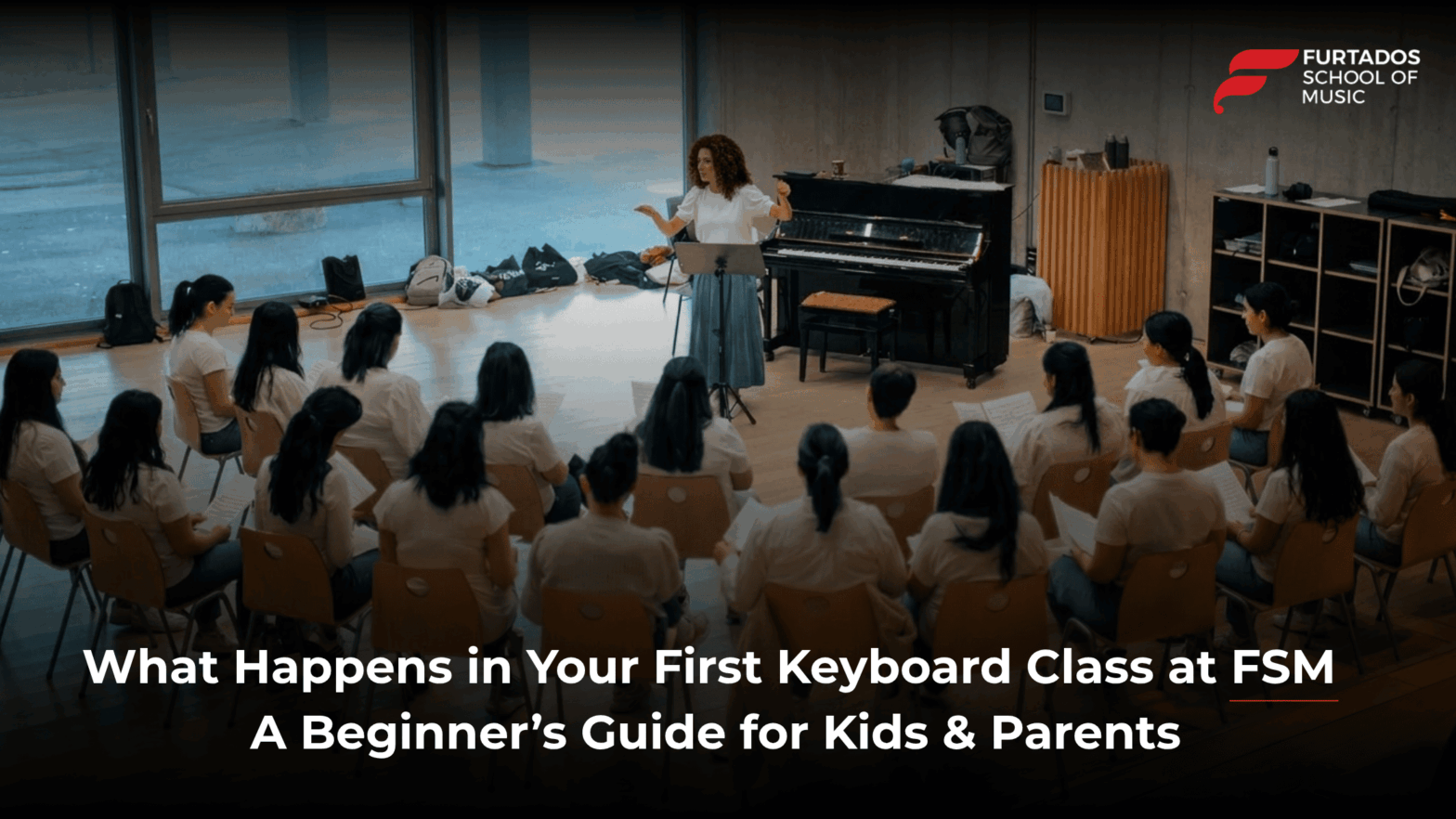
Starting something new can feel exciting and slightly overwhelming – especially for children stepping into the world of music for the very first time.
Many parents enrolling their child in keyboard classes for beginners often wonder:
Will my child feel comfortable?
Will they understand the lessons?
Do they need prior musical knowledge?
The good news is that a child’s first keyboard lesson is never about perfection. It is about discovery, confidence, and building excitement for music in a fun and encouraging environment.
At Furtados School of Music (FSM), beginner learning is designed to feel interactive, stress-free, and enjoyable for young learners who are just beginning their musical journey.
Why the First Keyboard Class Matters
The first experience with music often shapes how children feel about learning an instrument in the future.
A positive introduction helps children:
- Feel confident around music
- Build curiosity toward learning
- Become comfortable with instruments
- Develop listening and coordination skills
- Enjoy the learning process without pressure
This is why good keyboard lessons for kids focus on creating comfort before complexity.
At FSM, the goal is not to overwhelm beginners with theory on day one. Instead, children are gradually introduced to music through engaging activities and simple practical learning.
For parents exploring keyboard classes for beginners, the first few sessions are important because they build the child’s emotional connection with music.
What Happens During the First Keyboard Lesson?
Parents searching for keyboard classes for beginners are often surprised to learn how fun and interactive the first session can be.
Here’s what children typically experience during their beginner class.
1. Getting Comfortable with the Keyboard
The first step is simply helping children explore the instrument.
Students are introduced to:
- The layout of the keyboard
- Black and white keys
- Basic hand positioning
- Simple sound patterns
- Finger coordination exercises
The idea is to remove fear and make the keyboard feel approachable.
For many children, even pressing their first few notes becomes an exciting moment during their first keyboard lesson.
2. Learning Through Fun Musical Activities
A beginner’s first keyboard lesson is not just about memorizing notes.
Children often learn through:
- Musical games
- Rhythm clapping exercises
- Listening activities
- Fun repetition patterns
- Singing simple melodies
These activities help children naturally connect sound with movement and memory.
This is especially important in keyboard lessons for kids, where enjoyment plays a huge role in long-term learning.
Young learners absorb information faster when music feels playful instead of pressured.
3. Introduction to Basic Music Notes
Children are gently introduced to beginner music concepts like:
- Note names
- Rhythm patterns
- Simple melodies
- Finger numbers
- Basic coordination
Instead of focusing heavily on theory, teachers help children experience music practically.
This keeps young learners engaged and motivated throughout their beginner journey.
In many keyboard classes for beginners, children initially struggle with confidence. But interactive learning methods make note recognition easier and more enjoyable.
4. Understanding Rhythm & Coordination
Another important part of the first keyboard lesson is helping children understand rhythm naturally.
Teachers may ask children to:
- Clap to beats
- Count simple patterns
- Follow musical timing
- Play coordinated finger exercises
These activities improve concentration, timing, and listening skills while keeping the classroom energetic and interactive.
Strong rhythm understanding helps children progress faster in future keyboard lessons for kids.
Building Confidence from Day One
One of the biggest goals of beginner keyboard classes for beginners is confidence building.
Many children enter their first class feeling shy or nervous. But when lessons are interactive and encouraging, they quickly become comfortable expressing themselves through music.
Teachers at Furtados School of Music understand that every child learns differently. Some may learn quickly through listening, while others may respond better to visuals or repetition.
The learning process is designed to support every type of learner.
Children are encouraged to ask questions, experiment with sounds, and enjoy the process without fear of making mistakes.
A Fun & Creative Learning Environment
Children learn best when they enjoy the process.
This is why FSM’s beginner learning approach focuses on:
- Positive encouragement
- Interactive teaching
- Creative exercises
- Step-by-step learning
- Age-appropriate instruction
For younger beginners, programs like Keys Are Fun make keyboard lessons for kids even more engaging through child-friendly lessons, activities, and creative musical exploration.
The program is designed to help children enjoy music while gradually building strong foundations in keyboard learning.
This playful approach makes a huge difference during a child’s first keyboard lesson, especially for children who are naturally shy or easily distracted.
Why Parents Are Choosing Keyboard Classes Earlier
Today, many parents are introducing music education at a younger age because they recognize the developmental benefits beyond just learning an instrument.
Structured keyboard classes for beginners can help children improve:
- Memory and concentration
- Coordination skills
- Listening ability
- Emotional expression
- Creativity and patience
Music also teaches children consistency and discipline in a gentle and enjoyable way.
For many families, beginner keyboard learning becomes an important part of a child’s overall development.
What Parents Can Expect After the First Class
After the first few sessions, parents often notice:
- Increased curiosity toward music
- Better rhythm and listening skills
- Improved confidence
- Excitement to practice at home
- Greater comfort around instruments
The key is consistency and encouragement – not perfection.
Children who feel emotionally connected to music are more likely to continue learning and developing their skills over time.
Parents often notice that even one positive first keyboard lesson can completely change how children respond to music learning.
Why Parents Choose FSM for Beginner Keyboard Lessons
Choosing the right beginner music program matters, especially during the early stages.
Parents looking for keyboard lessons for kids often prefer learning environments that are structured, supportive, and enjoyable at the same time.
Furtados School of Music combines experienced music education with interactive teaching methods that help beginners feel comfortable from their very first class.
Parents can also explore FSM’s YouTube channel for beginner-friendly music content, practice ideas, and musical inspiration for children starting their journey.
Whether a child wants to casually explore music or seriously learn keyboard over time, the right start can make all the difference.
Final Thoughts
A child’s first music class is about much more than learning an instrument.
It is about confidence, creativity, self-expression, and discovering the joy of music.
The best keyboard classes for beginners are not the ones that push children the hardest – they are the ones that make children excited to come back for the next lesson.
And sometimes, one simple first keyboard lesson can become the beginning of a lifelong love for music.
For parents exploring meaningful and engaging keyboard lessons for kids, the goal should always be to choose an environment where children feel inspired, encouraged, and genuinely happy to learn.
FAQs
1. What age is best to start keyboard classes for beginners?
Most children can begin keyboard classes for beginners as early as 4–5 years old, depending on their interest, attention span, and comfort with learning activities. Early exposure helps children build rhythm, listening skills, and confidence naturally.
2. What happens in a child’s first keyboard lesson?
A child’s first keyboard lesson usually includes basic keyboard introduction, simple rhythm exercises, note recognition, finger placement, and fun musical activities. The goal is to make children feel comfortable and excited about learning music.
3. Are keyboard lessons for kids difficult for beginners?
No, good keyboard lessons for kids are designed to be interactive, enjoyable, and beginner-friendly. Programs at Furtados School of Music focus on step-by-step learning that helps children understand music in a fun and stress-free way.