“Just 10 more minutes…”
How many times have parents heard that line?
From online classes and cartoons to gaming apps and endless YouTube videos, screens have become a part of every child’s daily routine. No matter where you are from, the concern is often the same – is all this screen time actually helping your child grow, or is it simply keeping them occupied for a few extra hours?
The truth is, screen time itself is not the real problem. The real question is whether your child is simply consuming content or learning something meaningful from it. There is a huge difference between passive scrolling and active learning. Watching random videos may keep children busy for a while, but activities like music learning help them think, focus, create, and build confidence.
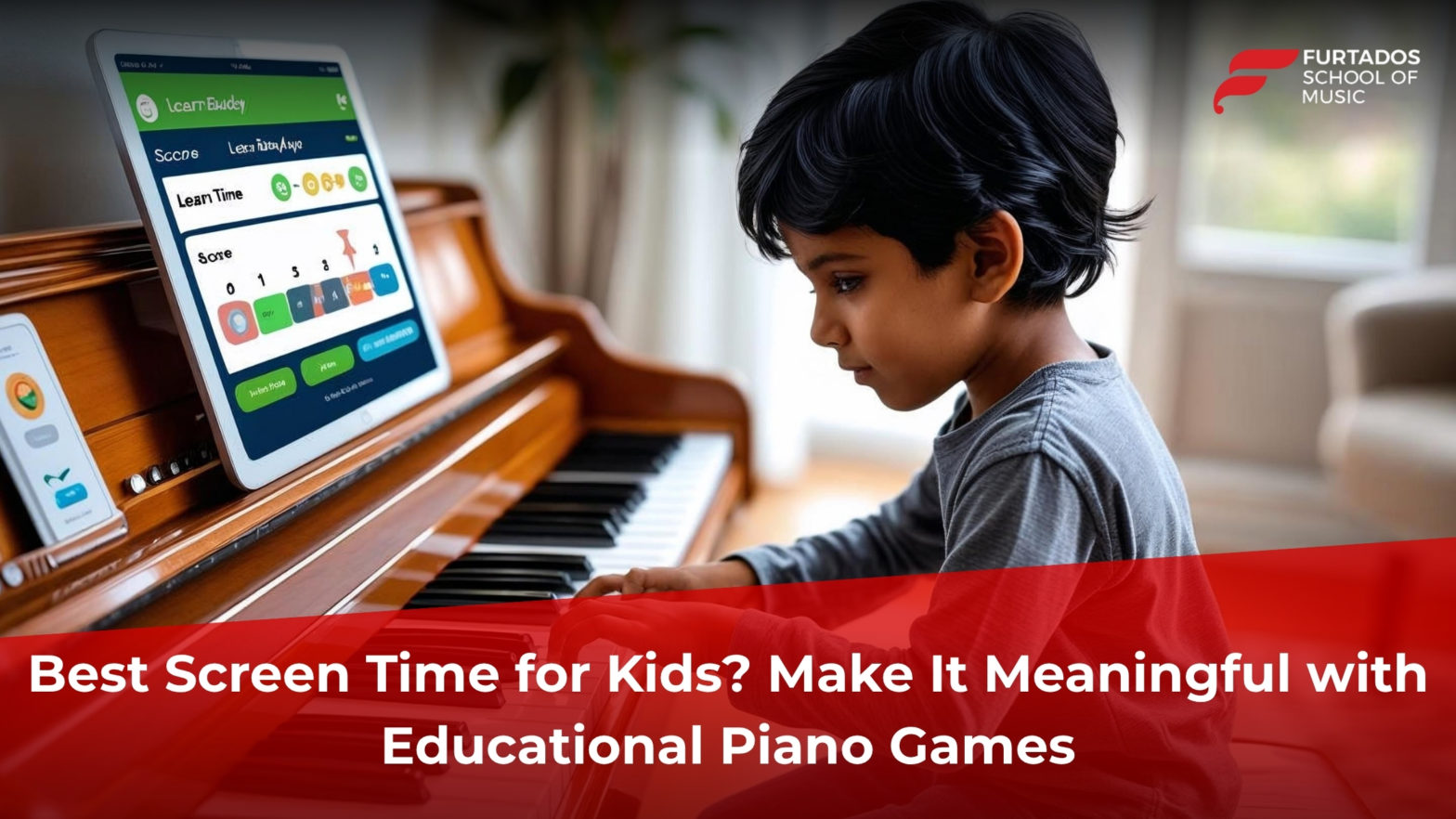
This is where piano games for kids and educational piano games become a much smarter choice. Instead of simply filling time, music-based learning turns screen time into something productive. It helps children improve concentration, memory, creativity, listening skills, and emotional expression – while still feeling like fun rather than work.
At Furtados School of Music, we believe music should feel like play, not pressure. That’s exactly why we created Keys Are Fun, a specially designed virtual keyboard learning program for children, along with our kid-focused YouTube channel, Music Is Fun India. Both are built around one simple idea: the best kind of screen time is the one that helps children grow.
Why Parents Need a Smarter Screen Time Approach
Let’s be honest – telling children to “stop using screens” no longer works. Screens are now part of learning, school, entertainment, and even social interaction. Instead of trying to remove screens completely, parents today are looking for better ways to make screen time meaningful.
Too much passive screen time often creates problems that parents notice quickly. Shorter attention spans, poor sleep habits, reduced creativity, dependency on instant entertainment, and less physical activity are all common concerns. Children become used to fast-moving content and constant stimulation, which can make patience and focus harder to develop.
But when screen time becomes skill-based and interactive, the outcome changes completely. Activities like music learning challenge children to think, listen carefully, solve small problems, and stay engaged with purpose. This is why more parents are searching for better screen time activities for kids – something that feels enjoyable for children while still supporting real development
Why Music Is One of the Best Learning Tools for Children
Music is far more than just an extracurricular hobby. It plays a major role in early brain development and helps children build skills that support them far beyond music itself. Learning music improves concentration, memory, listening skills, discipline, patience, emotional expression, and self-confidence.
When children begin with keyboard learning, the process becomes even more accessible because it is visual, interactive, and exciting. They can immediately connect sounds with actions, which makes learning feel natural. This is one reason why online keyboard classes for kids are becoming such a popular choice for parents today.
Children are naturally drawn to rhythm, sound, and repetition. Music gives them a creative outlet while also building structure and routine. What feels like play to them is actually helping their brain develop stronger learning habits.
How Educational Piano Games Improve Cognitive Skills
Children learn best when they don’t feel like they are studying, and that is the real beauty of educational piano games. These games transform lessons into playful activities where children learn note recognition, rhythm, timing, and listening skills without feeling pressured.
When a child plays a keyboard-based activity, they are doing much more than pressing keys. They are listening carefully, recognizing patterns, coordinating movement, remembering instructions, and making quick decisions. Multiple parts of the brain work together at the same time, which strengthens cognitive development naturally.
This improves memory retention, hand-eye coordination, focus, and problem-solving abilities. It also helps children develop patience and confidence because they experience small wins as they learn. Parents searching for piano games for kids are often surprised to realize they are not just finding entertainment – they are investing in emotional growth and stronger learning skills.
Why Screen-Free Time Still Matters
Even meaningful screen time needs balance. Children also need time away from screens to play physically, build social interaction, improve imagination, and strengthen emotional regulation. Screen-free time helps children slow down, be present, and learn patience without constant stimulation.
It also improves sleep quality, emotional balance, and family bonding. A child who spends time practicing music offline after an online lesson is learning far more than music – they are building consistency and discipline. Watching a rhythm lesson and then recreating it with family turns learning into a shared experience.
At FSM, we believe the goal is not “screen time versus no screen time.” The real goal is smart screen time combined with healthy screen-free time. That balance creates habits that support children for life.
Keys Are Fun – Learning That Feels Like Play
Many parents want music lessons for their children, but traditional classes can sometimes feel too serious or overwhelming in the beginning. Children may lose interest if learning feels like pressure instead of fun.
That is exactly why Furtados School of Music created Keys Are Fun. It is a specially designed virtual keyboard learning program for children aged 4+ where music learning feels playful, exciting, and age-appropriate. Instead of rigid lessons, children experience interactive keyboard sessions, fun-based learning modules, games, quizzes, and creative musical exploration.
It is one of the most engaging online keyboard classes for kids because it focuses on joy first, and learning naturally follows. For parents, that means less resistance and more excitement. For children, it means learning becomes something they genuinely look forward to instead of something they are forced to do.
Music Is Fun India – Learning Beyond the Lesson
Children do not stop learning when class ends, and that is why FSM also launched Music Is Fun India, a dedicated kid-focused YouTube channel designed to make music part of everyday life. It offers safe, engaging, and educational content created specifically for young learners.
Instead of random videos that only pass time, children can spend time with musical activities, rhythm lessons, beginner-friendly music content, playful listening exercises, and child-safe educational entertainment. It supports the same philosophy as Keys Are Fun – make music feel natural, make learning joyful, and make screen time count.
For parents looking for better screen time activities for kids, this becomes a trusted and meaningful option because it keeps children connected to learning even outside formal lessons.
Final Thoughts
The question is no longer whether children should have screen time. The better question is: what should screen time teach them?
If children are already spending time on screens, why not turn that time into something valuable? Why not choose creativity over consumption, confidence over distraction, and music over mindless scrolling?
With piano games for kids, learning becomes exciting instead of forced. With educational piano games, children develop real cognitive and emotional skills while still having fun. And with Furtados School of Music’s Keys Are Fun and Music Is Fun India, parents get something even more valuable – peace of mind.
Because the best screen time is not the one that keeps children busy. It is the one that helps them become better, happier, and more confident little humans.
FAQs
1. Are piano games really helpful for children’s learning?
Yes, piano games for kids are highly beneficial because they improve concentration, listening skills, memory, creativity, and hand-eye coordination. Since children learn best through interaction and play, music-based activities make learning feel enjoyable while still building strong developmental skills.
2. How much screen time is healthy for kids?
Healthy screen time depends on age, but the focus should always be on quality over quantity. Educational and skill-based activities like music learning are far more valuable than passive entertainment. Combining meaningful screen time with regular screen-free activities creates the healthiest balance for children.
3. Why are online keyboard classes better than regular entertainment apps?
Unlike entertainment apps that mainly distract, online keyboard classes for kids help children build real-life skills like focus, discipline, creativity, confidence, and patience. Programs like Keys Are Fun make learning enjoyable while giving parents a much more productive screen-time option.