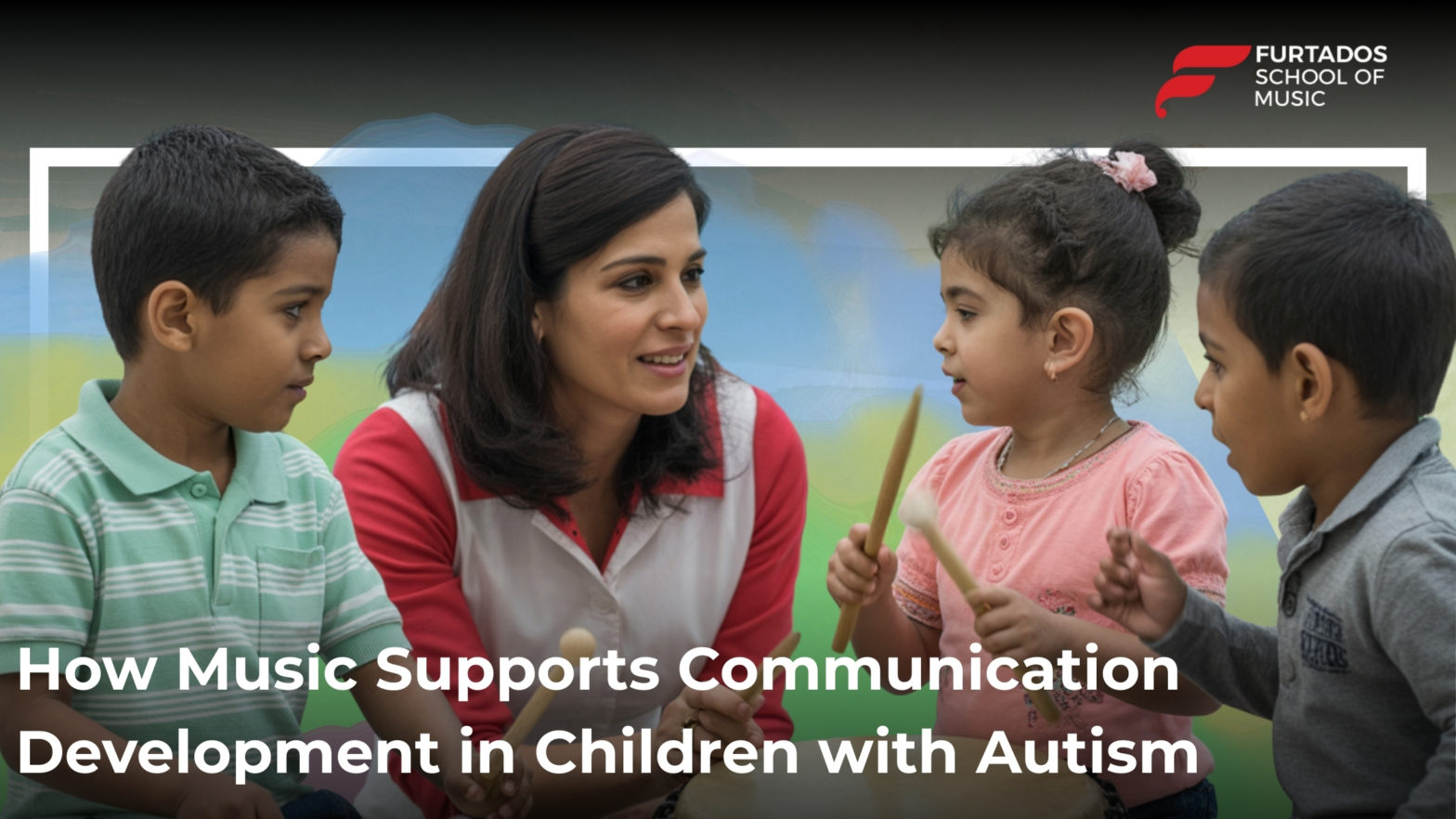
Every parent wants their child to feel understood – to express needs, emotions, and ideas in a way that feels natural and confident. For children on the autism spectrum, communication can sometimes develop differently. This difference does not reflect a lack of intelligence or emotion, but rather a unique way of processing language, sound, and social cues. In recent years, music therapy for autism and music-based learning approaches have gained attention for their ability to support communication in a gentle, engaging, and effective manner.
Music has the ability to reach children beyond words. Its rhythm, structure, and emotional quality can open doors to interaction where traditional communication methods may feel challenging.
Understanding Autism and Communication Differences
Autism spectrum disorder (ASD) affects how children interact with the world around them. Some children may experience delayed speech, others may find it difficult to initiate conversation, maintain eye contact, or interpret social signals. Communication challenges vary widely, making flexible and multi-sensory approaches especially valuable.
Because music does not rely solely on verbal language, it offers an alternative pathway for expression and connection.
What Is Music Therapy for Autism?
Music therapy for autism is a structured, goal-oriented approach conducted by trained music therapists who use musical experiences to support developmental objectives such as communication, social interaction, and emotional regulation. It is important to note that music therapy differs from standard music lessons. The focus is not on learning an instrument or performing, but on using sound, rhythm, and interaction to encourage communication and engagement.
While not all music programs provide clinical music therapy, many music-based learning environments still incorporate principles that support communication and confidence in children with autism.
Why Music Is Effective for Children with Autism
Music engages multiple areas of the brain simultaneously – auditory, motor, emotional, and cognitive regions. This integrated stimulation can make musical interaction easier to process than spoken language alone.
Rhythm brings predictability, which many children with autism find comforting. Melody provides emotional expression without demanding verbal explanation. Together, these elements create a structured yet creative environment that encourages participation at the child’s own pace.
This neurological and emotional engagement forms the foundation for many of the benefits of music therapy for children with autism observed across research and practice.
How Music Supports Communication Skills
Encouraging Verbal Expression
Singing and rhythmic repetition help children practise speech sounds in a natural, enjoyable way. Songs provide structure and predictability, making it easier for children to anticipate and reproduce words. Over time, this can support language development and confidence in verbal expression.
Supporting Non-Verbal Communication
Communication is more than speech. Through music, children practise turn-taking, imitation, gesture use, and shared attention – all essential elements of interaction. Instrument play and movement activities encourage purposeful response and engagement.
These experiences directly support autism communication skills through music, allowing children to communicate in ways that feel comfortable and accessible.
Emotional Expression and Regulation
Music allows children to explore emotions safely. Changes in tempo, rhythm, and volume can mirror feelings such as excitement, calm, or frustration. Learning to recognise and respond to these emotional cues supports self-expression and emotional understanding.
Improving Focus and Engagement
Many children on the autism spectrum struggle with attention and sensory regulation. Music’s rhythmic patterns can provide grounding, helping children remain engaged and receptive during learning and interaction.
What Research and Experience Show
Studies across education and developmental science consistently highlight the benefits of music therapy for children with autism, including improvements in communication responsiveness, social interaction, and emotional engagement. Children exposed to structured musical activities often show increased eye contact, improved turn-taking, and greater willingness to participate in shared experiences.
While music-based learning is not a substitute for clinical therapy, it is widely recognised as a powerful complementary approach that supports holistic development.
Music Education vs Music Therapy: Understanding the Difference
It is important for parents to understand the distinction. Music therapy is a clinical intervention delivered by certified therapists, whereas music education focuses on learning musical skills. However, well-designed music education programs often incorporate elements that support communication, confidence, and emotional growth.
A nurturing music education environment can still play a meaningful role in supporting children who learn differently.
FSM’s Role in Inclusive Music Learning
At Furtados School of Music (FSM), the focus is on structured, age-appropriate music education delivered by trained educators in a supportive environment. While FSM does not offer clinical music therapy for autism, it recognises the broader developmental benefits that music can provide to children of all abilities.
FSM’s approach emphasises:
- Individual pacing and guided learning
- Gradual skill development
- Encouragement through sound and rhythm
- A positive, pressure-free learning environment
These principles help create a space where children can engage with music comfortably, build confidence, and express themselves – all of which support communication development.
FSM offers both in-centre and online learning options, allowing families to choose formats that best suit their child’s needs and comfort.
Supporting Music-Based Communication at Home
Parents can reinforce learning by integrating music into daily routines. Singing during transitions, using rhythm to structure activities, or allowing free musical exploration at home can strengthen communication naturally.
Consistency and encouragement matter more than perfection. When music feels enjoyable and safe, children are more likely to engage and express themselves.
A Foundation for Connection and Growth
Music has always been a universal language. For children with autism, it can become a bridge to expression, understanding, and connection. Whether through structured therapy or inclusive music education, the power of music lies in its ability to meet children where they are.
By supporting autism communication skills through music, families and educators help children build confidence, emotional awareness, and meaningful connections – skills that extend far beyond the music room.