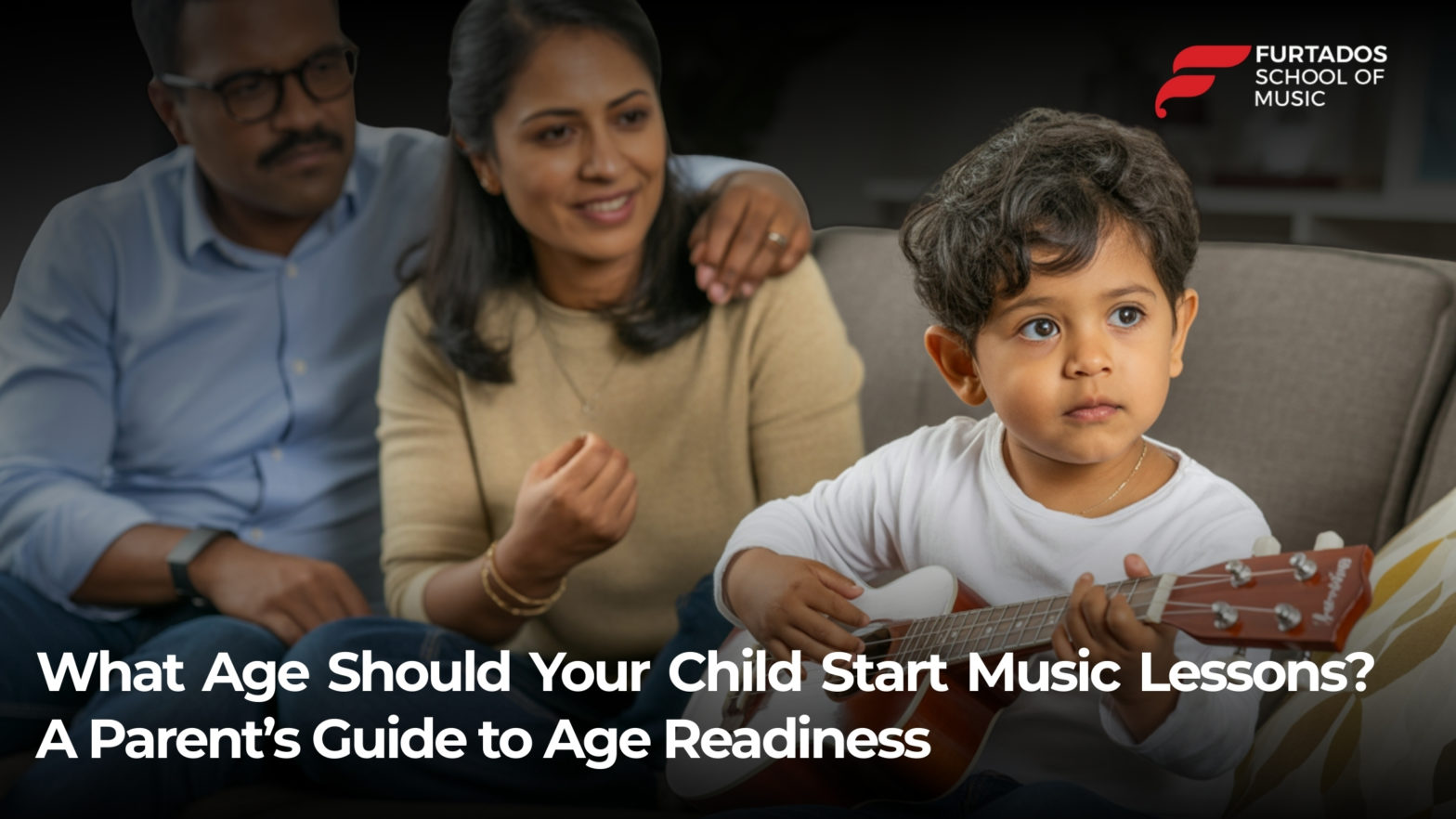
A Parent’s Guide to Age Readiness
As parents, we all want to give our children opportunities that nurture creativity, confidence, discipline, and joy. Music education is one such gift – one that stays with a child for life. Yet one of the most common questions parents ask is: What is the best age to start music lessons? Closely followed by: What age should a child start music lessons to truly benefit from them?
The answer isn’t about rushing or delaying. It’s about readiness. This guide helps parents understand age-wise musical development, what to look for in a child, and how to make an informed, pressure-free decision.
Why Age and Readiness Matter in Music Learning
Music is both an art and a skill. While exposure can begin early, structured learning works best when a child is developmentally prepared. Understanding the right music lessons for kids age helps ensure lessons feel enjoyable rather than overwhelming.
When children start at the right time:
- They build confidence instead of frustration
- Practice becomes engaging, not forced
- Progress feels natural and rewarding
That’s why age guidelines should always be paired with observing your child’s interest and comfort level.
Ages 3–5: Building Musical Awareness
Between ages three and five, children are discovering sounds, rhythm, and movement.
What music learning looks like at this age:
- Singing simple songs
- Clapping, tapping, and rhythm games
- Exploring sound through playful instruments
This phase is not about formal instruction. It’s about exposure, enjoyment, and developing a musical ear. Children learn best through play, repetition, and exploration. Early musical interaction strengthens listening skills, coordination, and emotional expression.
Many parents wonder if this is the best age to start music lessons. The answer is yes – when lessons are informal, playful, and age-appropriate.
At Furtados School of Music (FSM), this age group is supported through Music is Fun, a foundational program that blends rhythm, movement, listening, and basic musical concepts in an engaging way. Through both in-centre sessions and live online classes, children are introduced to music in a joyful, pressure-free environment.
Ages 6–7: The Ideal Starting Point for Structured Lessons
For many children, ages six to seven mark a natural transition into structured learning.
At this age, children typically:
- Have better focus and attention span
- Can follow step-by-step instructions
- Show improved coordination
- Begin understanding patterns and rhythm
This is often when parents ask, What age should a child start music lessons seriously? For most children, this age works beautifully for instruments such as piano, keyboard, guitar, violin, or foundational vocal training.
Lessons at this stage are still engaging and fun – but now include structure, technique, and gradual skill development.
FSM’s Keys Are Fun program is specifically designed for this stage. It introduces keyboard and music fundamentals with a balance of structure and creativity. Whether attended in-centre or through live interactive online classes, this program helps children build confidence and solid musical understanding in a supportive setting.
Ages 8 and Above: Skill Development and Musical Confidence
Starting music lessons at age eight or later is absolutely not “too late.” Older beginners often progress quickly because they:
- Understand concepts faster
- Practice more independently
- Set personal goals
- Develop stronger discipline
For children beginning at this stage, lessons focus on reading music, refining technique, improving rhythm accuracy, and building performance confidence.
FSM offers instrument-specific courses for this age group – including piano, guitar, violin, drums, ukulele, and vocal training – available both in-centre and online. These structured pathways help learners move beyond basics into real skill development, creativity, and musical expression.
Key Signs Your Child Is Ready for Music Lessons
Rather than focusing only on age, look for readiness cues. Your child may be ready if they:
- Show curiosity about music or instruments
- Enjoy singing, humming, or rhythmic play
- Can sit and focus for short periods
- Follow simple instructions
- Feel genuinely excited (not anxious) about learning
These signs matter more than finding a “perfect” age.
Common Parent Concerns – Answered
“Will my child feel pressured?”
Not when lessons are age-appropriate and taught with encouragement. Music should inspire, not intimidate.
“What if my child loses interest?”
Interest naturally fluctuates. A supportive learning environment, engaging lessons, and realistic expectations help children stay motivated.
“How much practice is enough?”
Short, consistent practice is better than long, forced sessions. Even 10–15 minutes daily can make a big difference.
How Music Education Supports Overall Development
Music learning benefits far more than musical ability alone. Research and experience show that children involved in music often develop:
- Stronger memory and concentration
- Better coordination and motor skills
- Emotional expression and self-confidence
- Discipline and patience
- Improved academic and social skills
This makes understanding music lessons for kids age an important part of holistic child development.
Choosing the Right Learning Environment
When enrolling your child, look for a program that:
- Adapts to your child’s pace
- Encourages curiosity and creativity
- Has trained, child-friendly instructors
- Balances technique with enjoyment
- Communicates progress clearly with parents
A nurturing environment makes all the difference in shaping your child’s long-term relationship with music.
Why Many Parents Choose FSM
At Furtados School of Music (FSM), lessons are designed around the child – not the clock. Programs are structured to support:
- Age-appropriate pedagogy
- Gradual skill progression
- Confidence-building performance exposure
- Supportive mentorship and personalised feedback
Whether your child is exploring Music is Fun, progressing through Keys Are Fun, or developing deeper skills with instrument-specific courses, FSM’s blend of creativity and structure helps children thrive. With flexible options for in-centre learning and live online classes, families can choose what fits their lifestyle best.
Final Thoughts
So, what truly is the best age to start music lessons?
It’s the age when your child is curious, comfortable, and ready to explore.
Asking what age should a child start music lessons is the right first step – but observing your child’s interest is even more important. With the right guidance and environment, music becomes a source of joy, growth, and lifelong confidence.
If you’re considering enrolling your child, FSM offers thoughtfully designed programs for every age – meeting children exactly where they are and helping them grow, one note at a time.