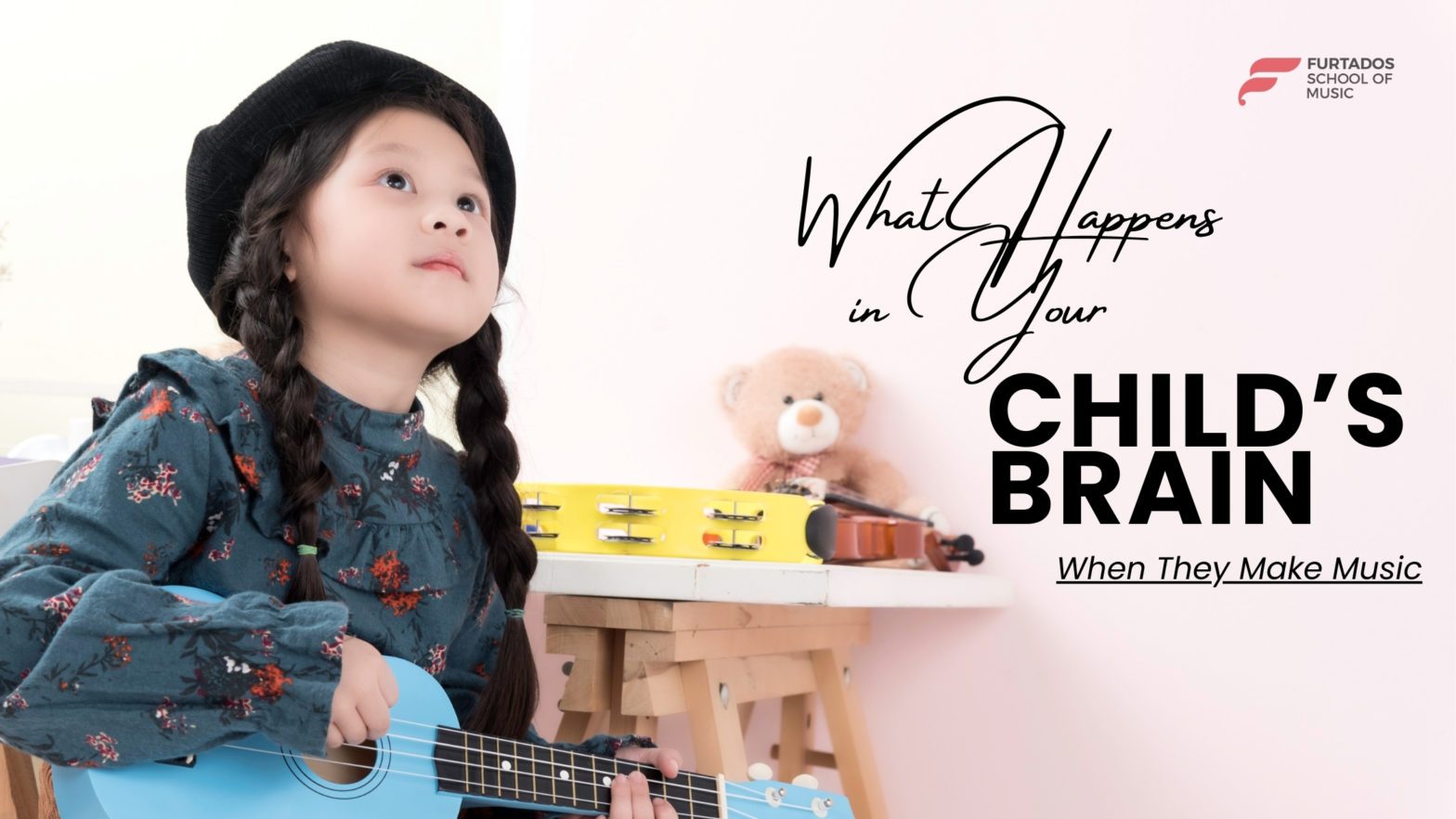
Discover how music transforms your child’s brain — from boosting focus and empathy to enhancing memory and coordination. Explore the child music education benefits and learn how Furtados School of Music (FSM) helps nurture young minds through the power of melody and rhythm.
The Hidden Symphony Inside Your Child’s Brain
Ever wondered what really happens in your child’s brain when they make music? It’s much more than just fun or entertainment. Each note, rhythm, and melody activates a complex network of brain regions, helping children grow smarter, more focused, and emotionally aware. This unique connection between sound and learning is what makes child music education benefits so powerful – it shapes not just musical ability, but overall brain development.
Step 1: Hearing the Note – Activating the Auditory Cortex
When a child listens to music, their auditory cortex lights up instantly. This region of the brain is responsible for processing sound, tone, and rhythm. Over time, exposure to musical patterns sharpens listening skills, memory, and even language comprehension.
In essence, the brain learns to recognize pitch, differentiate tones, and remember melodies – all of which enhance focus and auditory attention. Scientific research shows that children trained in music tend to develop better verbal memory and communication skills, illustrating one of the key effects of music on child brain function.
Step 2: Reading the Notes – Strengthening Visual and Motor Skills
When children read sheet music or follow finger placements on an instrument, they’re doing far more than just playing. Their brains are simultaneously activating visual, motor, and spatial regions.
Reading music requires translating visual information into coordinated hand movements. This strengthens the connection between what the eyes see and how the hands respond – a core part of music lessons for kids cognitive development. It improves fine motor control, hand-eye coordination, and problem-solving ability.
This skill doesn’t stay confined to music; children who learn instruments often show better concentration and academic performance in math and reading, thanks to this deep brain-to-body synchronization.
Step 3: Performing with Others – Building Empathy and Emotional Intelligence
When children perform music with peers – whether it’s singing in a choir, jamming in a group, or playing in a school concert – something magical happens. The emotional and empathy centers of the brain, particularly the limbic system, light up.
Collaborative music-making encourages listening, teamwork, and emotional connection. It teaches children how to respond to others’ cues, adjust to rhythm changes, and express feelings creatively. This shared experience fosters empathy and social bonding – benefits that last long beyond the stage.
These emotional gains are among the most profound child music education benefits, shaping confident, emotionally intelligent individuals who communicate better and connect deeper with others.
Why No App Can Replicate This
Digital apps can teach children to tap buttons or mimic melodies – but they cannot replicate the sensory and emotional immersion of real music learning. Music engages the mind, body, and emotions all at once.
Every practice session improves neural connectivity. Every melody fine-tunes focus. Every duet strengthens empathy. That’s something no screen can replace. True learning happens when children physically interact with instruments, feel vibrations, and express creativity – experiences that spark whole-brain growth.
FSM: Nurturing Brighter Minds Through Music
At Furtados School of Music (FSM), this philosophy drives every lesson. FSM understands that music isn’t just an art – it’s a lifelong learning tool that develops discipline, focus, and creativity in young minds.
Through structured music programs, expert mentors, and engaging learning environments, FSM helps children unlock the full spectrum of music lessons for kids cognitive development – from sharper memory to stronger emotional intelligence.
FSM’s approach encourages children to explore various instruments, collaborate with peers, and most importantly, enjoy the process of musical discovery. By doing so, they’re not just learning music – they’re strengthening their brains, one note at a time.
Conclusion: Let the Music Begin
Every beat, every chord, every song your child learns becomes a building block in their mental and emotional development. The effects of music on child brain are lasting – from sharper focus and improved communication to enhanced empathy and creativity.
If you’re looking for a way to give your child a lifelong advantage, introduce them to the world of music. Enroll them at Furtados School of Music (FSM), where passion meets purpose – and where each young learner begins their journey toward becoming not just a musician, but a well-rounded individual.
Because music doesn’t just fill the air – it fills the mind.