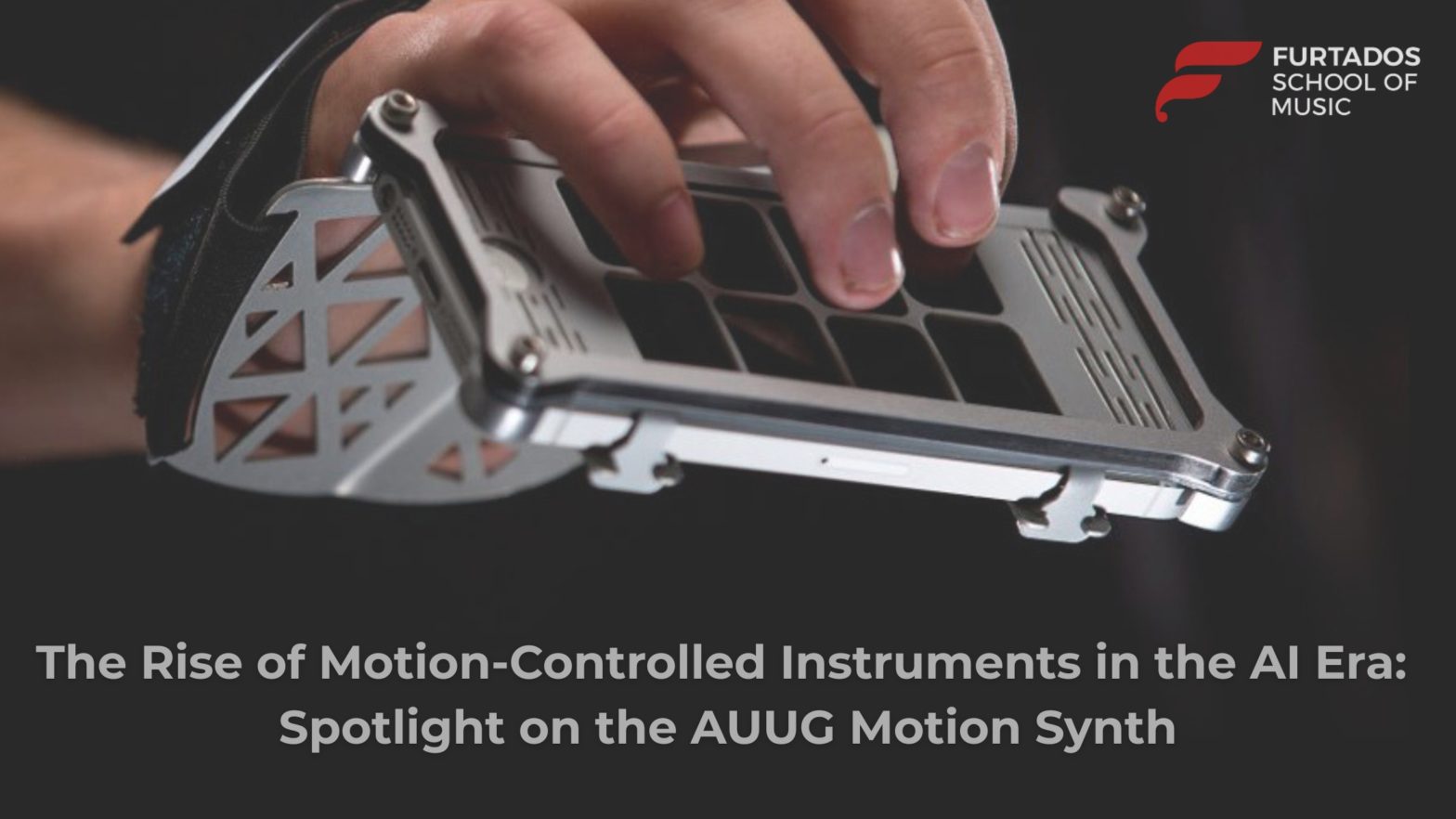
In the ever-evolving landscape of music technology, the fusion of artificial intelligence (AI) and motion-sensing devices is redefining how we create and experience music. One groundbreaking innovation leading this transformation is the AUUG Motion Synth, a device that converts physical gestures into musical notes, effectively turning movement into melody.
The AUUG Motion Synth: Bridging Movement and Sound
- The AUUG Motion Synth comprises two primary components: a motion-sensitive grip and a companion app. Users canp insert their iPhone or iPod touch into the grip, which, when combined with the app, allows them to control sound in real-time through physical gestures. This seamless integration transforms smartphones into expressive musical instruments, enabling performers to manipulate sound with the natural movements of their hands.
The device’s versatility extends beyond its proprietary app. The AUUG Motion Synth is designed to interface with other iOS music applications, offering musicians access to a vast array of sounds and effects.
Additionally, it can control external devices like hardware synthesizers or vocal harmonizers, and even manage audio or visual software on a laptop via Wi-Fi or cabled connections.
AI’s Pivotal Role in Modern Music Production
Artificial intelligence has become a cornerstone in contemporary music production, influencing various facets of the industry:
- Composition and Production: AI algorithms can analyze extensive music libraries to identify patterns and trends, assisting musicians in making informed creative decisions.
- Personalized Experiences: Streaming platforms utilize AI to offer personalized music recommendations, enhancing user engagement and satisfaction.
- Innovative Instruments: Devices like the AUUG Motion Synth exemplify how AI and motion-sensing technology can create new forms of musical expression, allowing artists to explore uncharted creative territories.
The Emergence of Motion-Sensing Musical Instruments
The integration of motion-sensing technology into musical instruments is gaining momentum, offering performers novel ways to engage with their art. For instance, the SOMI-1 is a wearable sensor that transforms movement into sound in real-time.
Consisting of Bluetooth motion sensors, a smartphone app, and a MIDI interface, the SOMI-1 enables performers to control music through gestures, adding a dynamic visual element to live performances.
The Future of AI and Motion-Controlled Music
As AI technology continues to advance, its integration with motion-controlled instruments is poised to further revolutionize the music industry. Emerging trends include AI-driven virtual instruments, real-time collaboration tools, and enhanced music analytics, all contributing to a more immersive and interactive musical experience.
The convergence of AI and motion-sensing technology is not merely a fleeting trend but a significant shift towards more interactive and personalized music creation. Innovations like the AUUG Motion Synth exemplify the boundless possibilities that arise when technology and artistry intertwine, heralding a new era where music is not just heard but also felt and experienced through movement.